Criticisms
More than Contemporary - On Gwon Osang's work
2012.02.02
Juhyun Lee | Curator
It's up to the audience how to read Gwon Osang's works. It's because his works are neutral in meaning and evaluation. He just devotes himself to his works with a serious attitude. And the result becomes a statement about human's visual perception, time and space, picture and sculpture, reality and imagination, and the spirit of the times. From a different viewpoint, the degree of freedom of the audience about the meaning and evaluation of Gwon Osang's works is due to the success of his works to represent such various contexts at the same time.
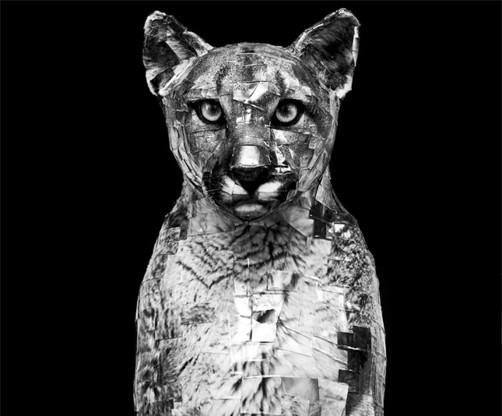
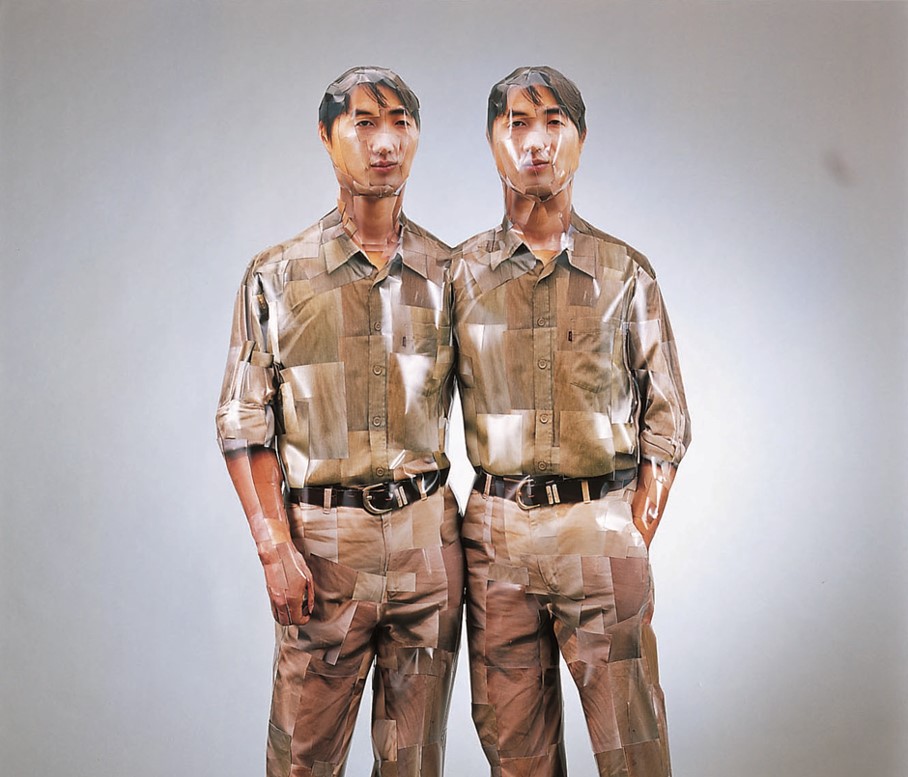
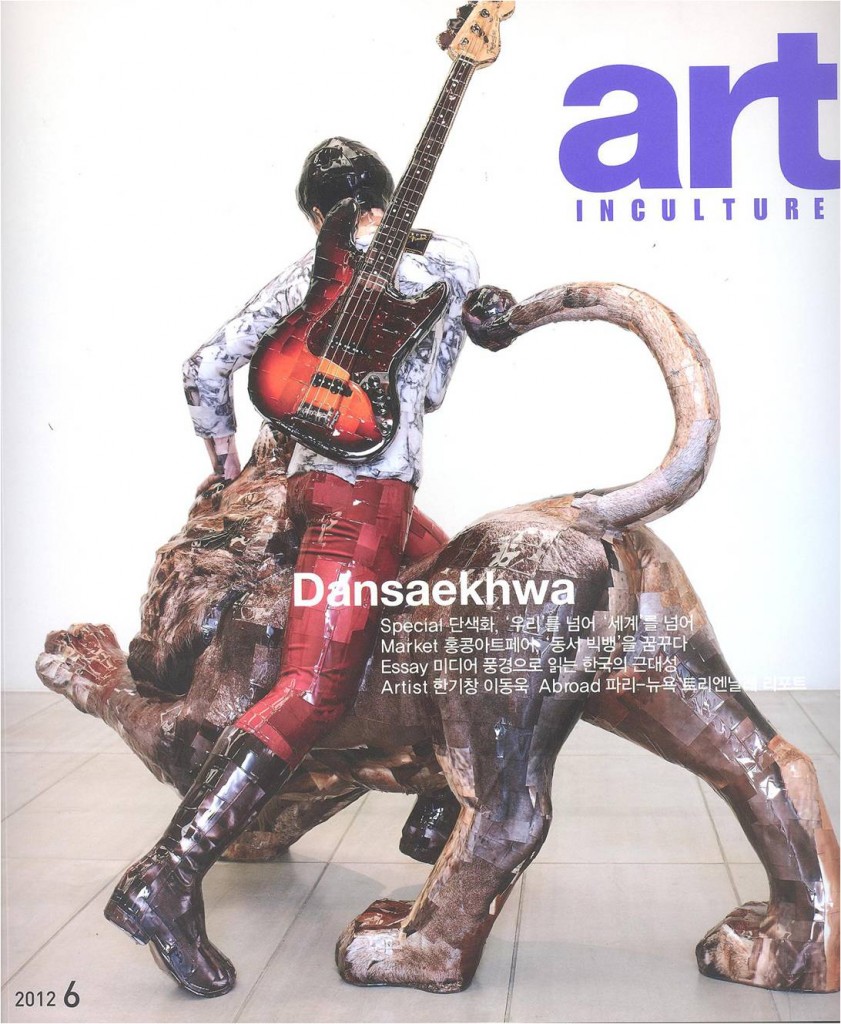
Gwon Osang's photo-sculpture works derived from his attempt to make a light piece. By thinking a bit deeper, we can conclude that such an attempt corresponded with the context of the discourse of modern art, the suspicion of revival and imitation, and was a challenge to the medium of sculpture. Borrowing the photo into the experimental process of the sculpture - borrowing the sculpture into the experimental process of the photo - suggests many things. His photo-sculpture is the work to revive the reality of 3 dimensional space into the fragments of 2 dimensional plane and then collect the fragments and compose 3 dimensional body. Such a process of work immediately reminds us of the modern artistic discourses such as boundary of genre of photo and sculpture or limitation of revival and imitation, but its result reveals itself in daily lives. His works nakedly display, from practical context of our lives, philosophical meaning of existence, and time fallacy of visual perception.
First, let's examine his photo-sculpture works. Hundreds of stills constituting one sculpture were photographed from different angles and at different times. When we see something, we do not doubt the simultaneity of its existence and our seeing it. In Gwon Osang's sculpture, however, moment and time are indiscriminately reconstructed. In front of his works, our firm belief in instantaneousness and simultaneity of time comes to be dismembered.
The subject matters of Gwon Osang's works include male, female, dog, car, bag, magazine, flower, stone, etc., all of which are familiar in our daily lives. Gwon Osang turns the familiarity into the awkwardness. Actually the awkwardness begins when familiar things are brought into a monumental space, namely a gallery. And this awkwardness is amplified in order according to the depth of feelings. Life-sized existence, the outside of which consists of fragments of stills and the inside of which is empty, stands before the audience as if to emphasize existential emptiness.
The more interesting thing is that the feeling which the existence, that Gwon Osang had playfully created, delivers: 3 heads of duck in place of human head; Siamese twins whose bodies are attached to each other; a nude whose distorted proportion reminds us of a space alien. These works are not much more awkward than those of normal bodies, and when we examine them carefully, such a deformed reconstruction seem to be more familiar and normal, and sometimes even reminds us of the figure of transcendental existence.
The boundary between awkwardness and familiarity is connected with the matter of attitude about whether to examine it or overlook it. In this sense, Gwon Osang's works create existence of the boundary thereby making the audience reflect the meaning of uncharacteristic daily lives and existence.
At a glance, Gwon Osang's ‘The Flat’ series seem to be pictures of real watch, jewel, and cosmetic, but they are pictures of images from magazines. After a photographer's images of real things are copied in magazines or prints and distributed, Gwon Osang cuts them out, and makes them into very simple sculptures, displays them, and photographs them again. By examining the meaning of such a process, we can conclude that series are more advanced than photo-sculpture in the matter of artistic discourse connected with originality & reproductiveness and plane & body. According to Gwon Osang who likes magazines, the subject matters of ‘The Flat’ are the most common images in magazines.
But the aftermath of the multiple process and the subject matters goes beyond the boundary of the most common images. Appearing in magazines most frequently is connected directly with the capital, which is the ideology of our time, and luxurious watch, jewel, and cosmetic are undeniable symbolic icon of our time. The signs of this era filling the printing paper are just images of images in the reproduced magazines which do not even have the property of matter. The works which were repeatedly reproduced in the process of production disclose the maximized emptiness of values. The icon which became unlimitedly reproduced images and the image based on the reproduced image, ‘The Flat’ are the works to visually deliver Simulacre's floating and characteristics of postmodernism more distinctly than any other language and discourse.
When I first saw Gwon Osang's ‘The Flat’ series, I was reminded of Andy Warhol. It's because they can be interpreted in a similar context and they contain the spirit of the times, and the beauty of the times can be found in the works or at least some parts of them connected with its standard can be found. But still, it's up to the audience how to read Gwon Osang's works. Though I commented artistic matters and even ideology or aesthetic taste about Gwon Osang's works, it might be the same as my misunderstanding of Andy Warhol at that time. It is distinctive that Gwon Osang's works cause interest of the audience with highly perfected structure and serious atmosphere even before thinking about the meaning and contents, and they are more contemporary than any other works, so they are just the statement of our times.
Writings