Articles
August, 2011
W
Essays
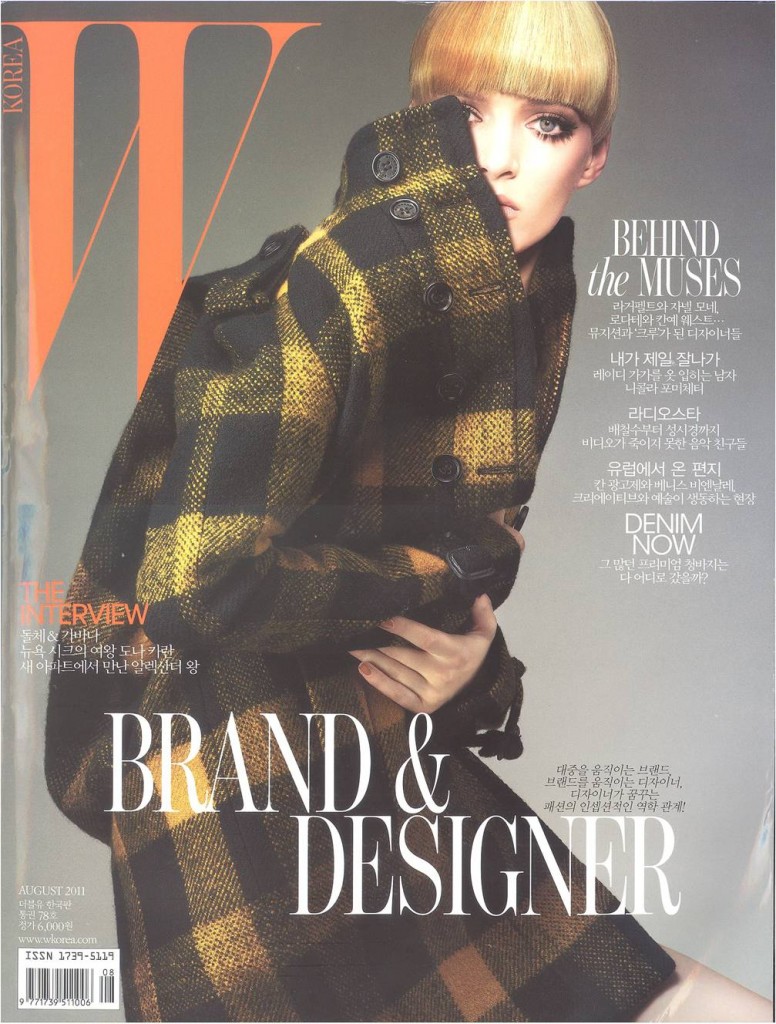
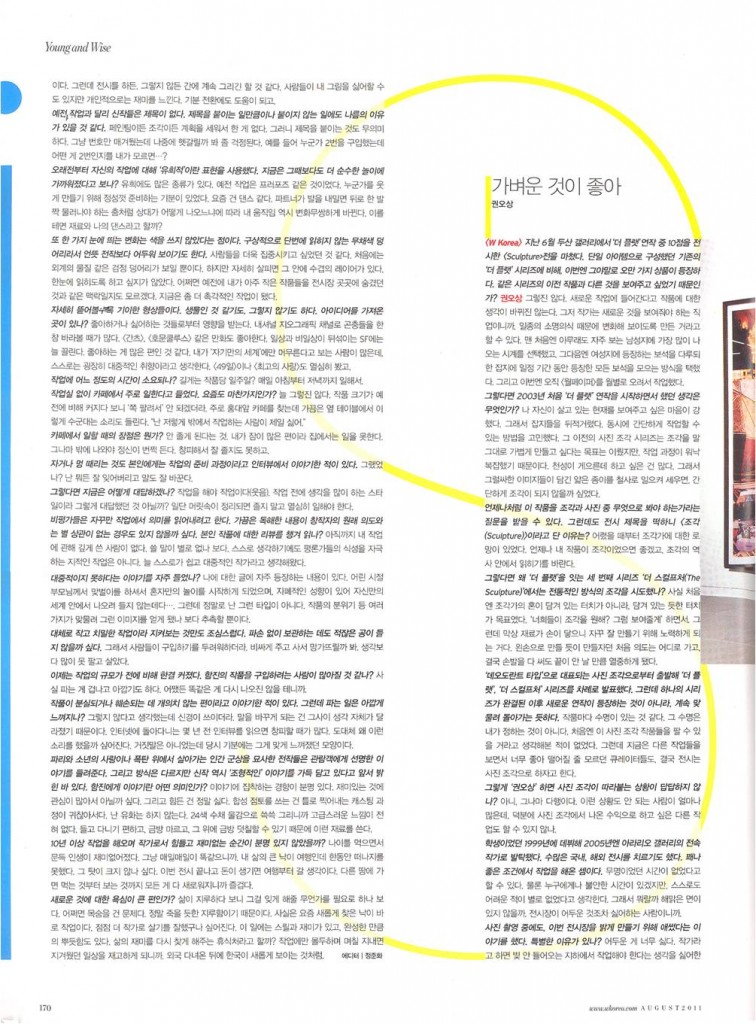
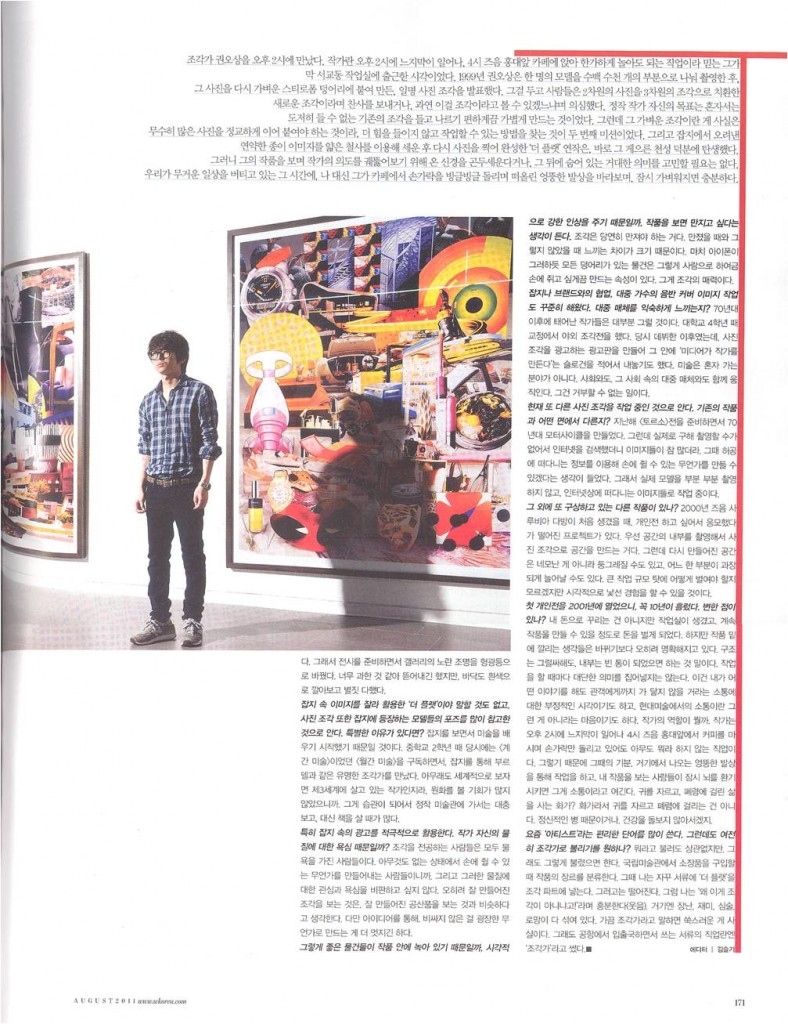
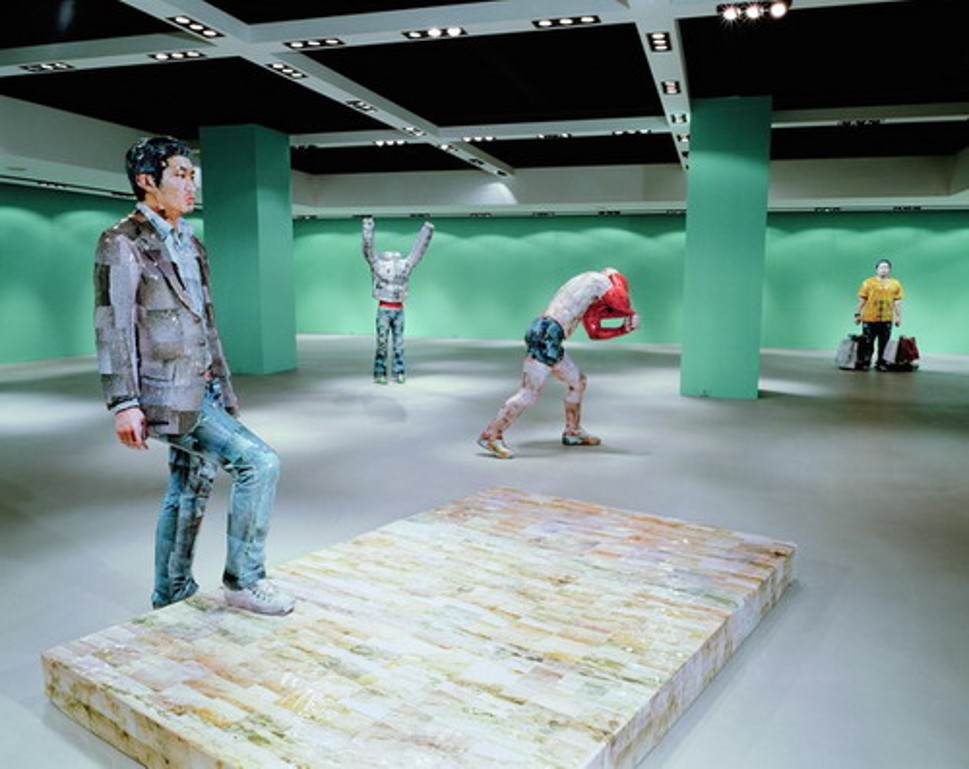
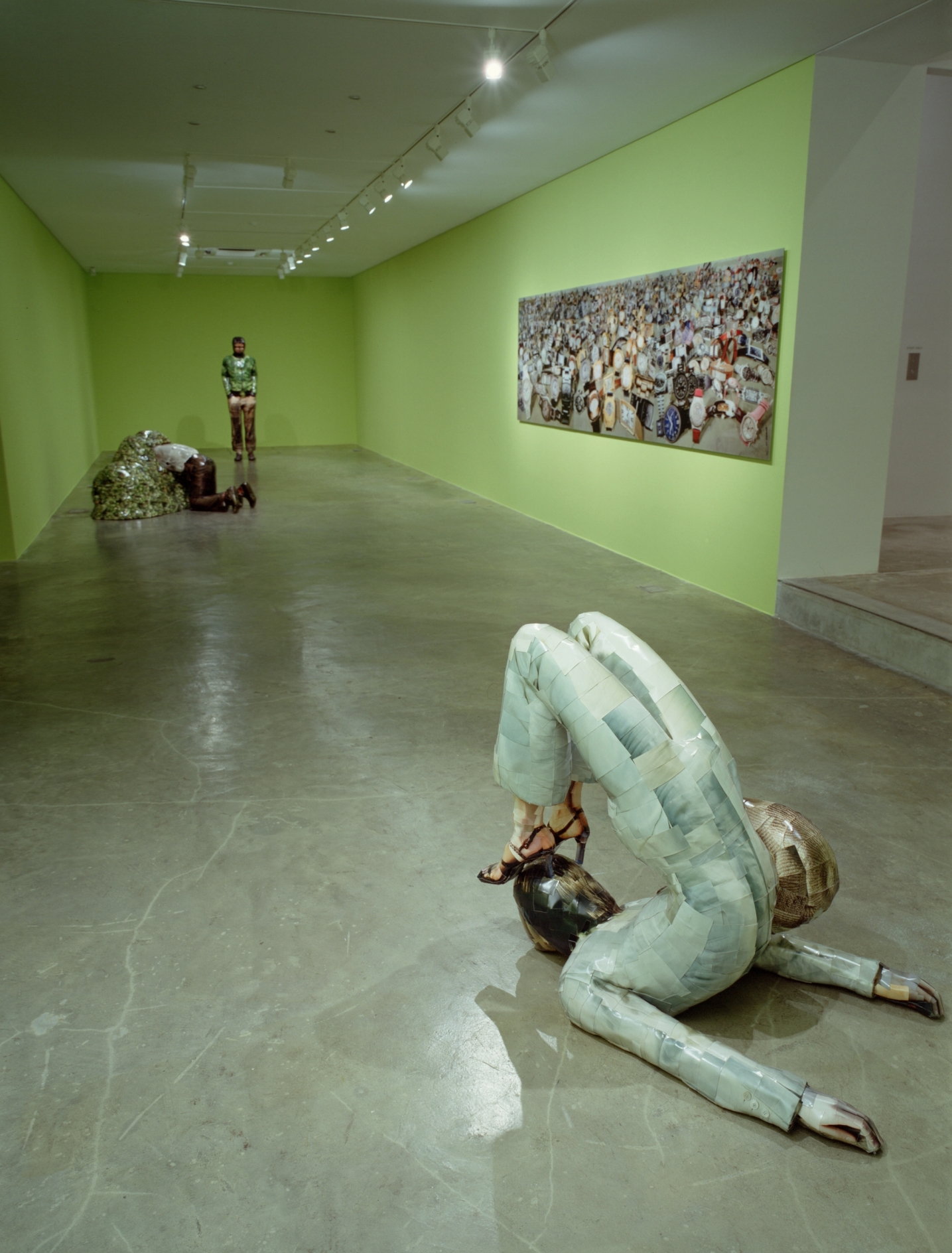
It's up to the audience how to read Gwon Osang's works. It's because his works are neutral in meaning and evaluation. He just devotes himself to his works with a serious attitude. And the result becomes a statement about human's visual perception,
2008
Gwon Osang
January, 2008
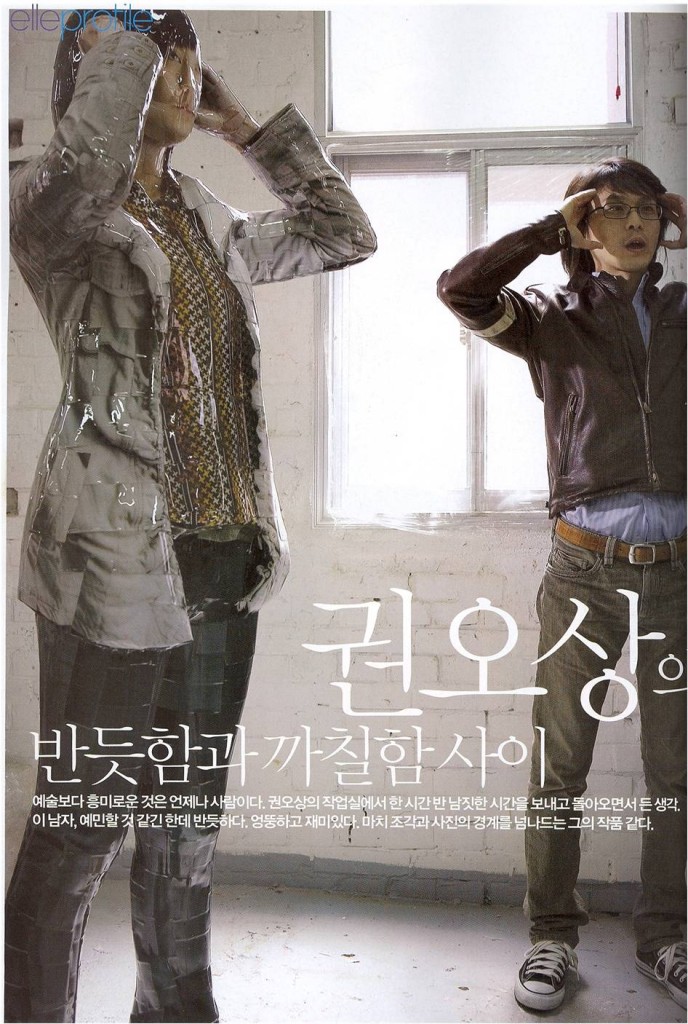
예술보다 흥미로운 것은 언제나 사람이다. 권오상의 작업실에서 한 시간 반 남짓한 시간을 보내고 돌아오면서 든 생각.
April, 2007
Criticisms
On February 17, 2004, at the opening of the 《Real Reality》 show at Kukje Gallery, the artist Gwon Osang seemed to have put everything that was of the 90s behind him, and in doing so, marked a small but significant victory. Through 《Real Reality》, Gwon became the first artist to come knocking on the doors of commercial success, and move beyond the obscure fray of the present art scene, largely made up of “second-generation baby boomer” artists and established by the tendencies of the 1990s. (“Second-generation baby boomers” refers to those born in Korea in the early-and mid-1970s. The birth rate statistics chart for post-war Korea resembles a camel with two humps. The first generation of baby boomers was born in the mid-and late-1960s, and the talkative and problematic 386 generation constitutes its core group.[1] While the population momentarily paused in 1971, the figures exploded again in the mid-1970s. Those born during that time are the second-generation baby boomers, known as the “Seo Taiji” [2]generation, which led the way to a mass consumer culture.) 《Real Reality》 represented a very significant event, as the first show within the domestic commercial gallery system that featured young Korean artists in their early 30s as the exhibition headliners. (In form, 《Real Reality》 was a four-person show that included Bae Bien-U (b.1950), Gwon Osang (b.1974), Lee Yoon-jean (b.1972) and Lee Joong-keun; in actuality, it was more like a three-person show of Gwon, Lee Yoon-jean and Lee Joong-keun.) When editions of the works in the show sold in large numbers following the opening, this served as proof that a domestic market able to handle young Korean artists really did exist. Did this mean that a new “niche market” had been cultivated? Sure enough, a little later on in February 2005, Gwon captured the public eye when he was chosen by Ci Kim (Kim Chang-il), head of Arario Gallery, to be a represented by Arario, and the artist soon entered a one-year hiatus. (As of 2006, Arario Gallery represents a total of 8 Korean artists: Gwon Osang, Koo Dong-hee, Lee Hyungkoo, Chung Sue-jin, Baek Hyun-jin, Park Sejin, Lee Dong-wook, and Jeon Joon-ho; and seven major Chinese artists: Wang Guanyi, Yue Minjun, Zhang Xiaogang, Liu Jianhua, Sui Jianguo, Fang Lijun, and Zeng Hao.)
2006.12.20
Interview
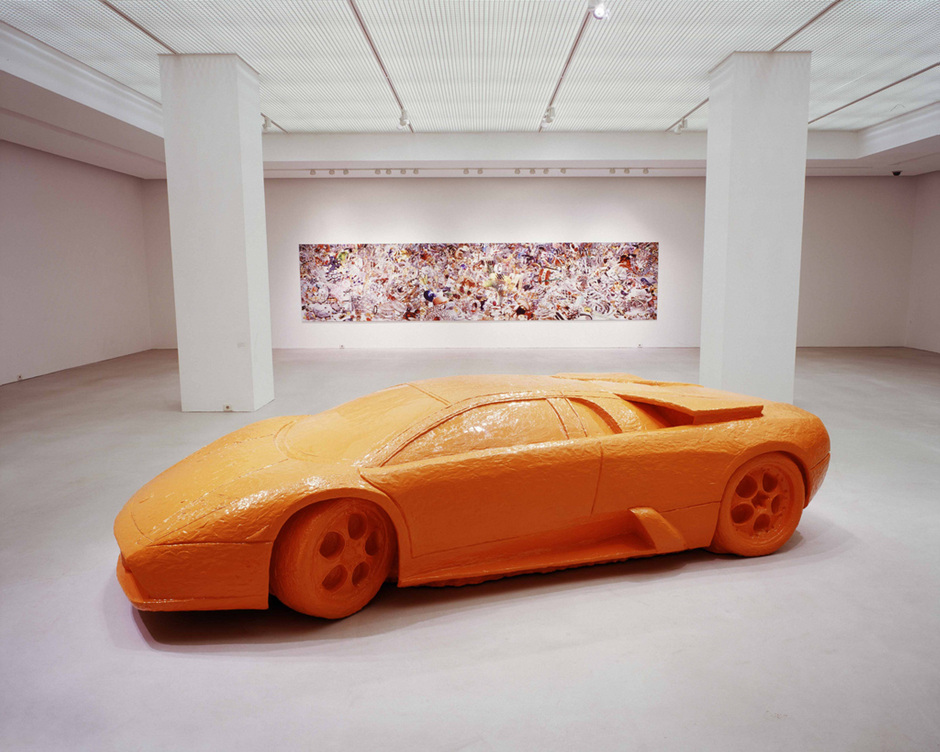
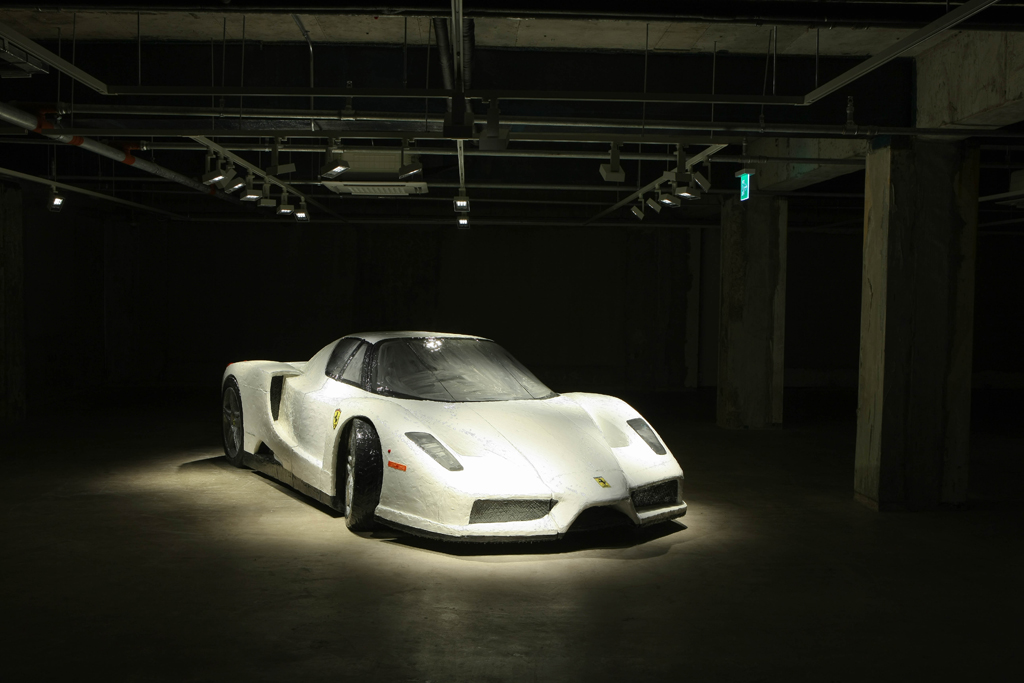
When we think of the artist Gwon Osang we think of sculpture that is closely related to photography. In your work ‘Deodorant Type’, you used photographs to create sculptures, and in ‘The Flat’ you cut out pictures from magazines to make sculptures and captured them by camera. But this time you sculpted a car using a conventional material, namely bronze, and titled it ‘The Sculpture’. I'm curious why you chose a super car as your object?
2006
최근 한국미술계 최대의 화제는 '젊음'이다. 원로와 중진들의 그늘에 가려져 기껏 전시회의 말석에나 끼어 황송해 하던 젊은 작가들이 돌연 한국미술계의 주역으로 대접받고 있다. 실험적인 비엔날레에서나 힘을 쓰던 것이 불과 몇 년 전인데 최근에는 상업화랑과 경매시장에까지 온통 젊은 작가들이 휩쓸고 있다. 급격한 변화를 몰고 온 세계화의 거센 파도 탓인가?
2006.03.14