Articles
Photographic sculptures fuse planarity and 3D
2012.05.09
Kwon Mee-yoo | The Korea Times
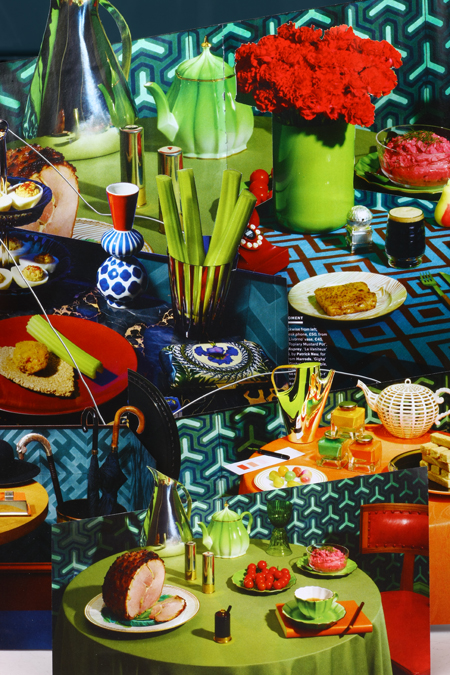
“2011, December (Vase)” by Gwon O-sang
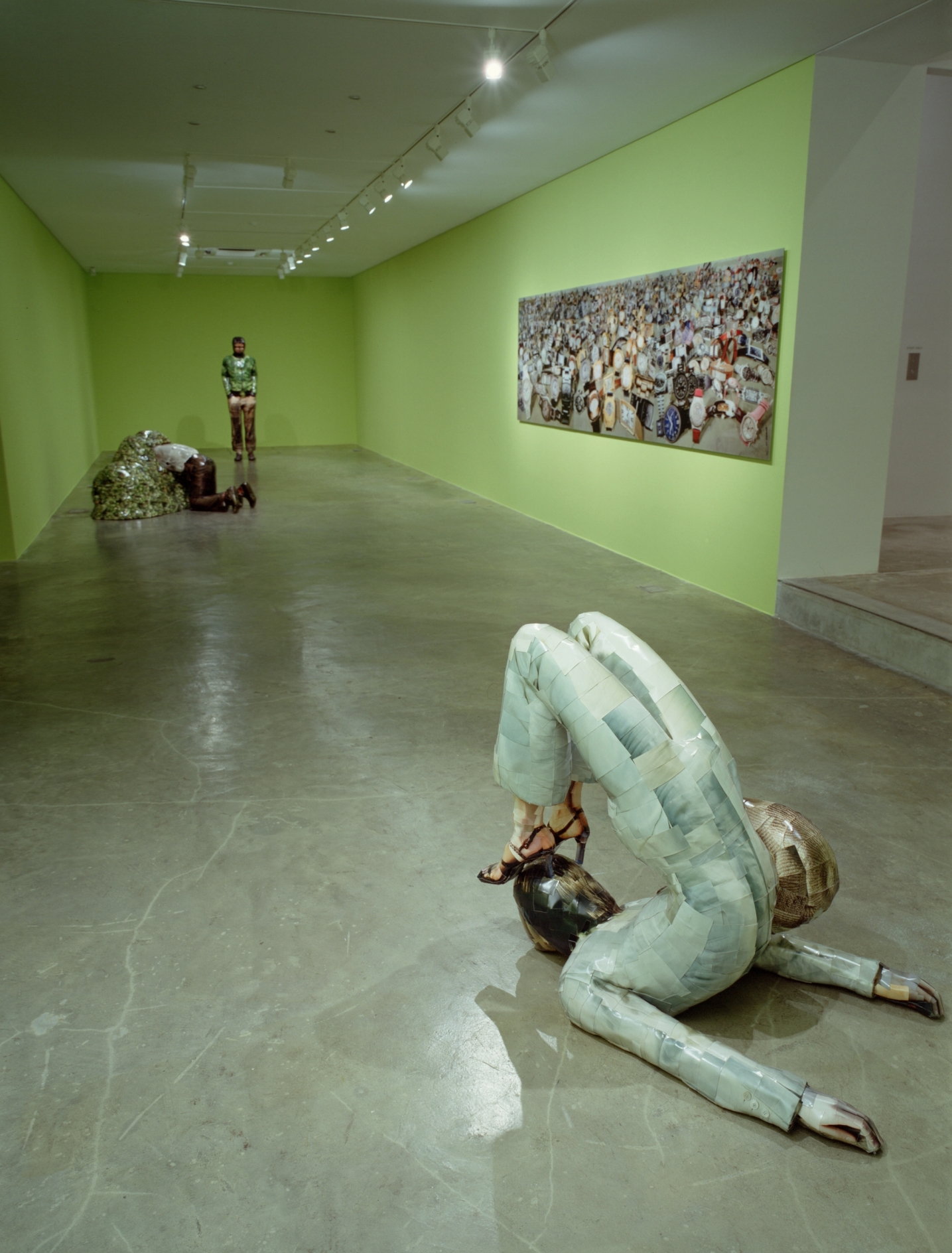
The concept of conventional sculpture and photography is turned upside down upon within the walls of the Arario Gallery Cheongdam, in Seoul, where solo exhibition of Gwon O-sang, also styled as Osang Gwon, is taking place.
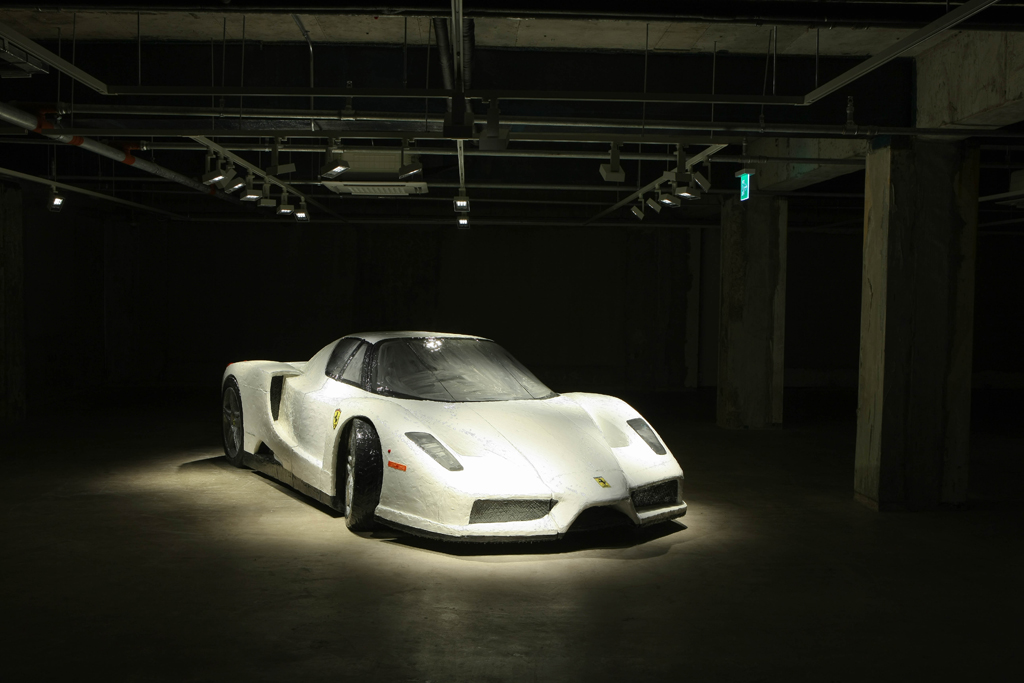
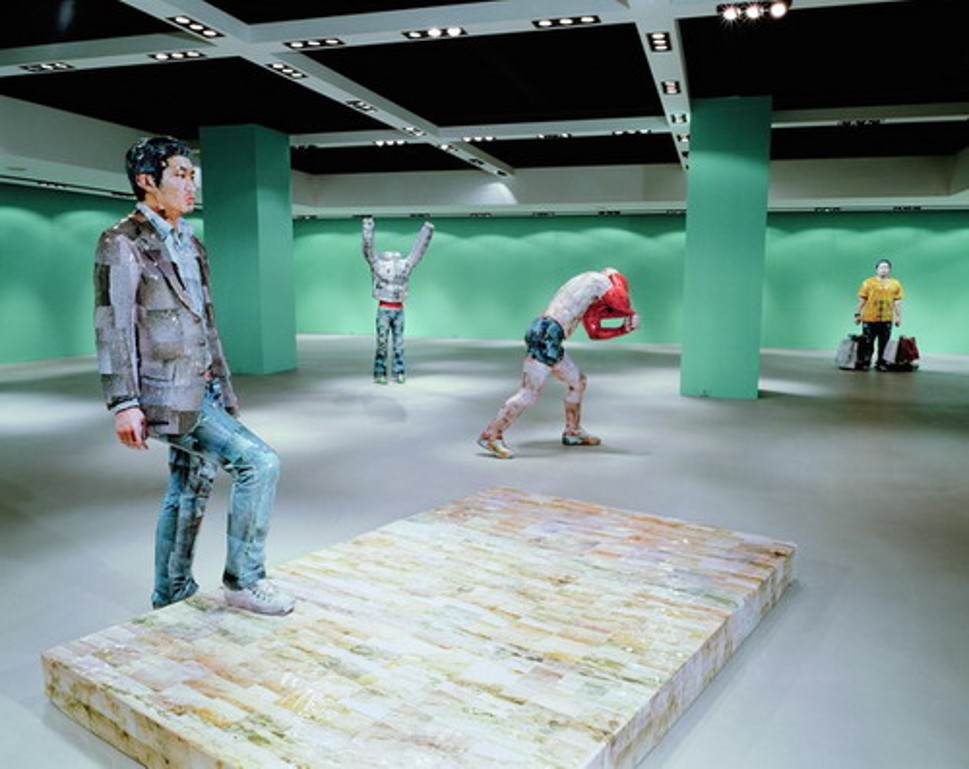
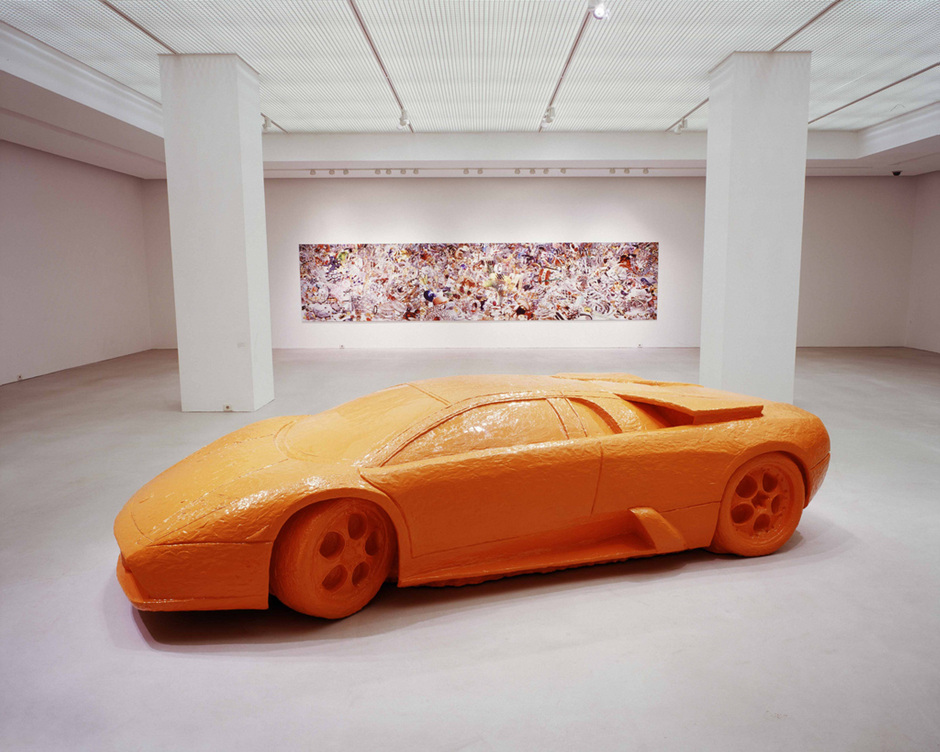
Photos of a person or an animal are affixed on extruding polystyrene foam structures to create a sculpture of photographs. The subject varies from esteemed British artist David Hockney to Indian actor Amitabh Bachchan, of whose photos are torn into many small pieces to be reassembled by the creative hands of Gwon.
This is Gwon’s first solo exhibition in Korea in some six years and 19 new sculptures and 15 new photo works are on display.
Previously, Gwon took photos of his subjects to make photo sculptures in the acclaimed “Deodorant Type” series, but for this exhibition he used images found on the Internet.
“Some of them could be better than photos taken by me, while others are poor in quality,” the artist said. “Searching on the Internet is one of the most common and fastest ways to find something, but it only gives superficial, shallow answers.”
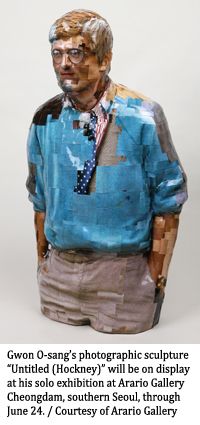
“Untitled (Hockney)” shows how Gwon treats the difference of time and space. The sculpture is made from photos of Hockney who is known to use technology in art. Using images of 20-something Hockney superimposed on his current ones, Gwon combines them.
The “Bust” series is Gwon’s attempt to return to the basics of sculpture. “A friend of mine had asked me to make a bust of his father which inspired me to work on a series of busts,” he said. “I recognized the power of photo sculptures and made busts of my assistants. Making human busts made the works so serious, so I added ones of animals such as an ostrich, puma and cat.”
Three sculptures in the main room — “Untitled,” “Fennder” and “Ruby Nike Bape” — are in a more complex form.
“I borrowed the pose from classic sculptures from the Renaissance and added a modern twist,” the artist said. “Based on the pose, I added my friends, assistants and celebrities found on the Internet and even myself.”
Gwon appears in his work for the first time in “Untitled,” as the bottommost character. People above him are model Miranda Kerr, singer Kanye West and Indian actor Bachchan.
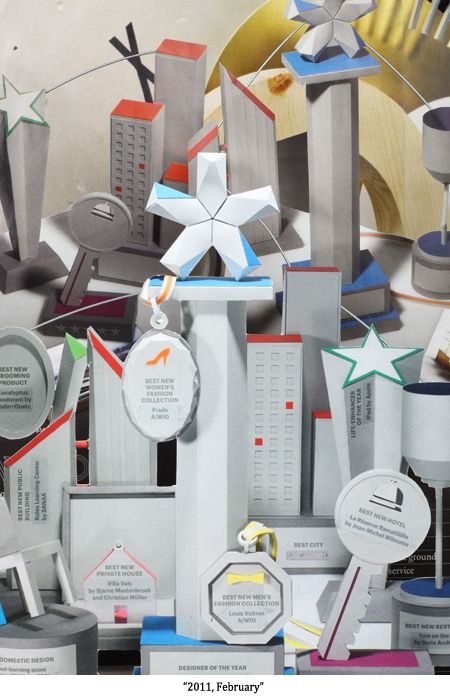
“The Flat” series, consisting of large prints on the wall, take a different approach to the concept of sculpture. It seems like a collage or computer graphics, but when examined closely, it is an actual photo of Gwon’s paper sculptures with wires propping up paper cutouts.
Gwon skims through a certain issue of a magazine and cuts out images from it. He makes a “paper sculpture” by giving shape to the cutouts with wire and then takes a photograph of those paper sculptures.
A two-dimensional surface becomes a three-dimensional sculpture and it is transferred to a two-dimensional photo again, making the visual depth of the paper sculptures planar. Full of images of the latest products and advertisements, “The Flat” series is his interpretation of the latest fads in sculpture as still life in modern times.
“I want to capture ‘the present’ through my works. The magazines have photos of expensive products not even released on the market. I wondered what if all these fine, expensive goods were to be combined together,” he said.
Gwon’s exhibition runs through June 24. Admission is free and the gallery is closed on Mondays.
Visit www.arariogallery.com or call (02) 541-5701 for more information.
References
Writings
Articles
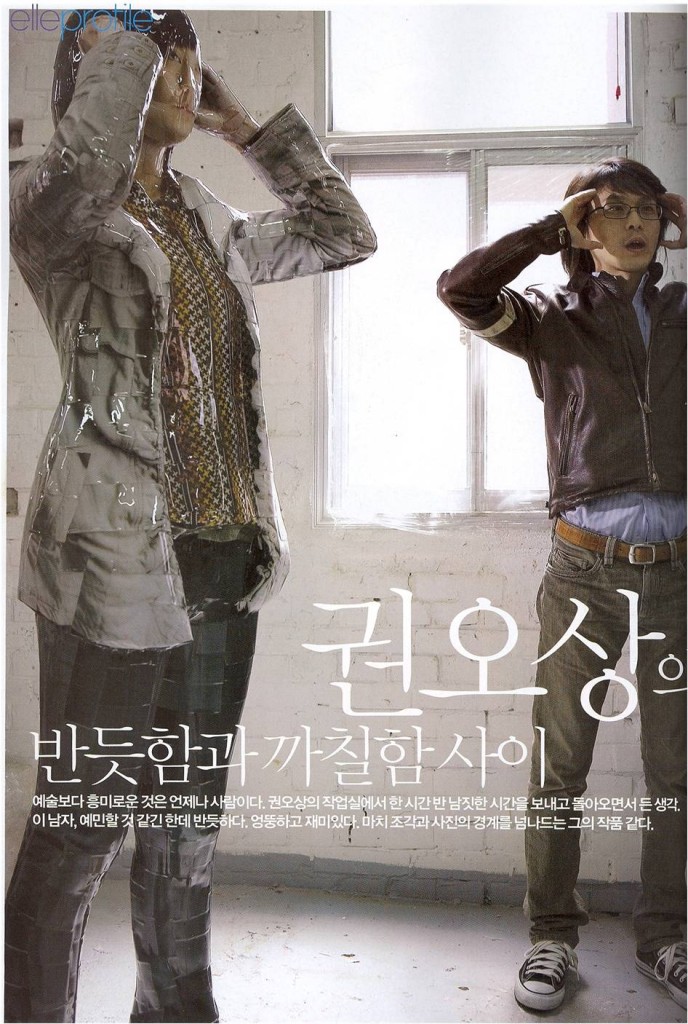
권오상의 반듯함과 까칠함 사이
예술보다 흥미로운 것은 언제나 사람이다. 권오상의 작업실에서 한 시간 반 남짓한 시간을 보내고 돌아오면서 든 생각.
April, 2007