Texts
Gwon Osang x G-Dragon: Sculpting the “Übermensch”
2025.03.04
Editorial Team
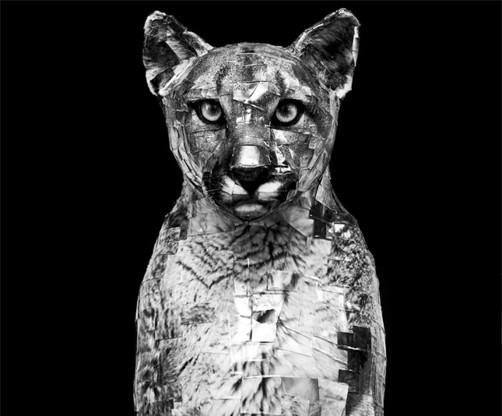
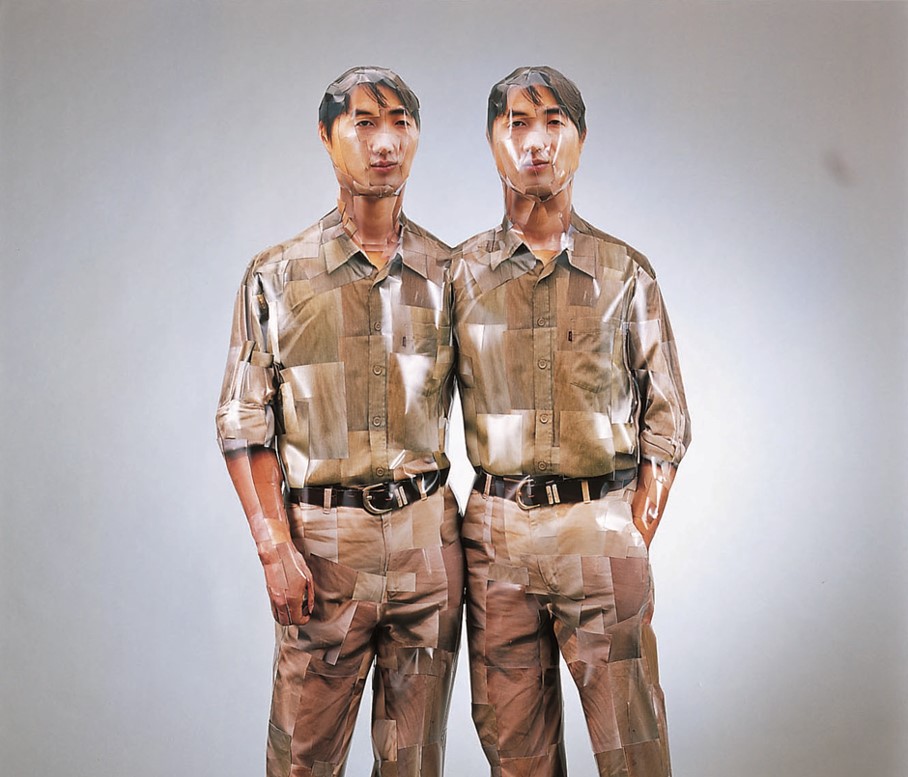
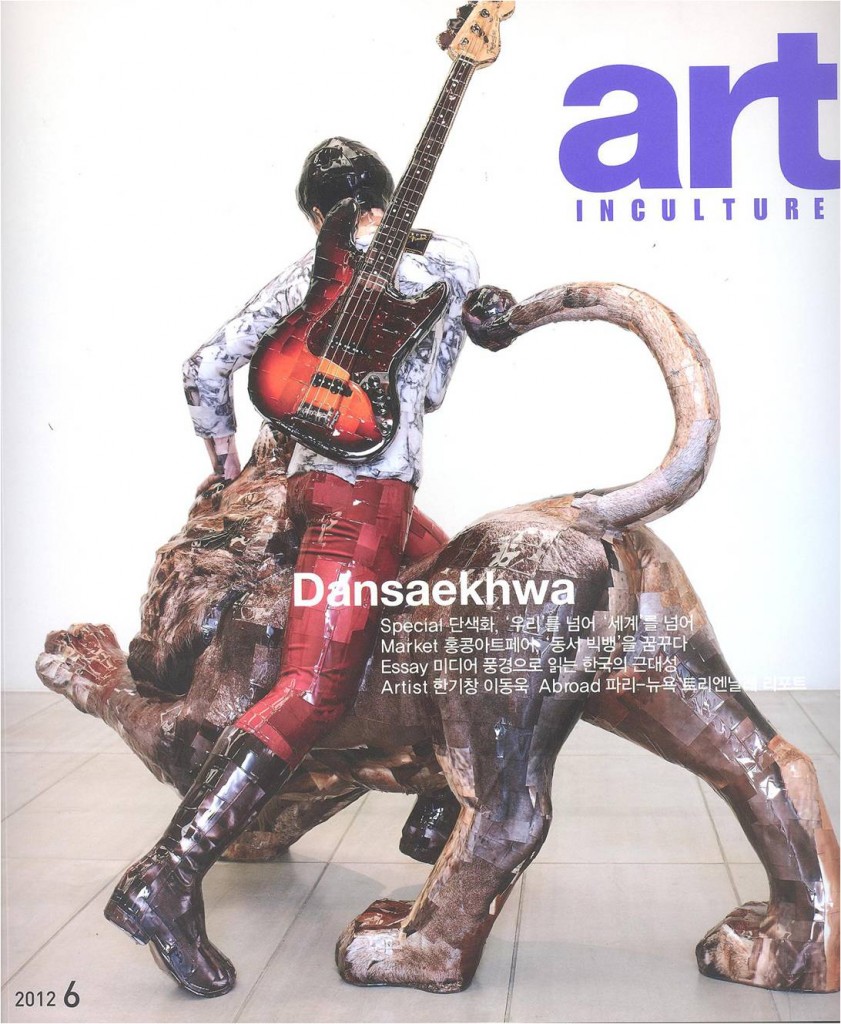
What does it mean to exist beyond the confines of identity? Gwon Osang, a pioneering figure in contemporary sculpture, dissects the visual lexicon of pop culture through his signature ‘photo-sculpture’ technique, fusing photography and three-dimensional form to interrogate notions of representation.
His 2015 work, Untitled: G-Dragon, A Space of No Name, initially unveiled at Seoul Museum of Art’s 《PEACEMINUSONE_Beyond the Stage》, anticipated a trajectory that would manifest nearly a decade later in G-Dragon’s latest album, “Übermensch”—an ideological synchronicity that demands closer scrutiny.
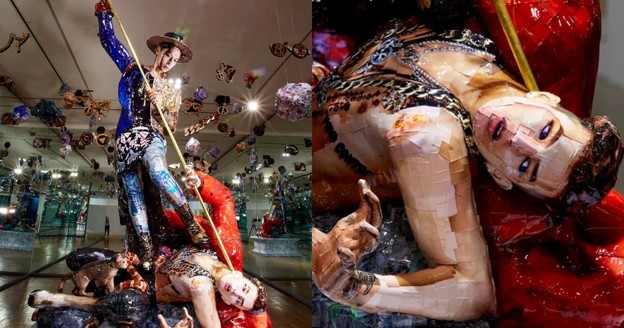
Untitled: G-Dragon, A Space of No Name, 2015, C-print, mixed media, size variable,
Presented at 《PEACEMINUSONE_Beyond the Stage》, Seoul Museum of Art, Seoul.
Image courtesy of the artist and Seoul Museum of Art, Seoul.
Breaking the Image: Gwon’s Hybrid Medium
Gwon’s practice destabilizes the notion of sculpture as a static, monolithic entity. Instead, his ‘photo-sculptures’ function as fractured, multi-layered assemblages that reflect contemporary identity’s fluidity and fragmentation. In Untitled: G-Dragon, A Space of No Name, he deconstructs the persona of G-Dragon—a cultural icon whose very essence thrives on transformation and self-reinvention. The work engages with the image not as a fixed reality but as an ever-shifting construct, mirroring the way media cultivates, amplifies, and distorts celebrity.
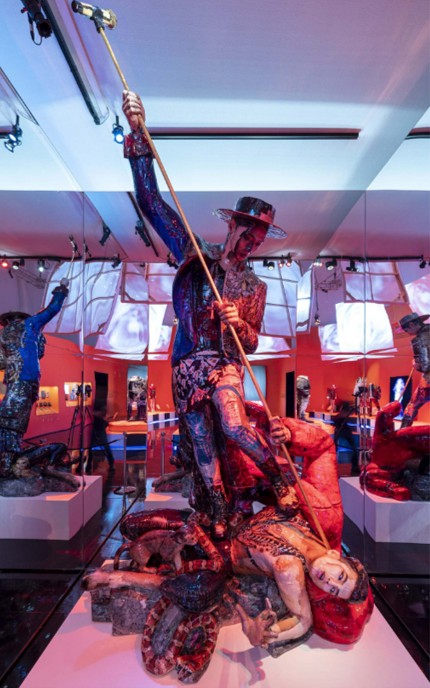 Untitled: G-Dragon, A Space of No Name has been featured in various exhibitions worldwide, including 《Hallyu! The Korean Wave》 at the V&A Museum in London. / © Arario Gallery
The Übermensch Reimagined
Friedrich Nietzsche’s concept of the “Übermensch” in Thus Spoke Zarathustra proposes an individual who transcends imposed moralities to create new values. Gwon’s sculpture captures G-Dragon as precisely such a figure—an artist who has continuously dismantled and reassembled his identity across music, fashion, and contemporary culture. Far from merely depicting a K-pop idol, Gwon positions G-Dragon as a postmodern “Übermensch”: a figure both celebrated and scrutinized, angelic and demonic, performer and provocateur.
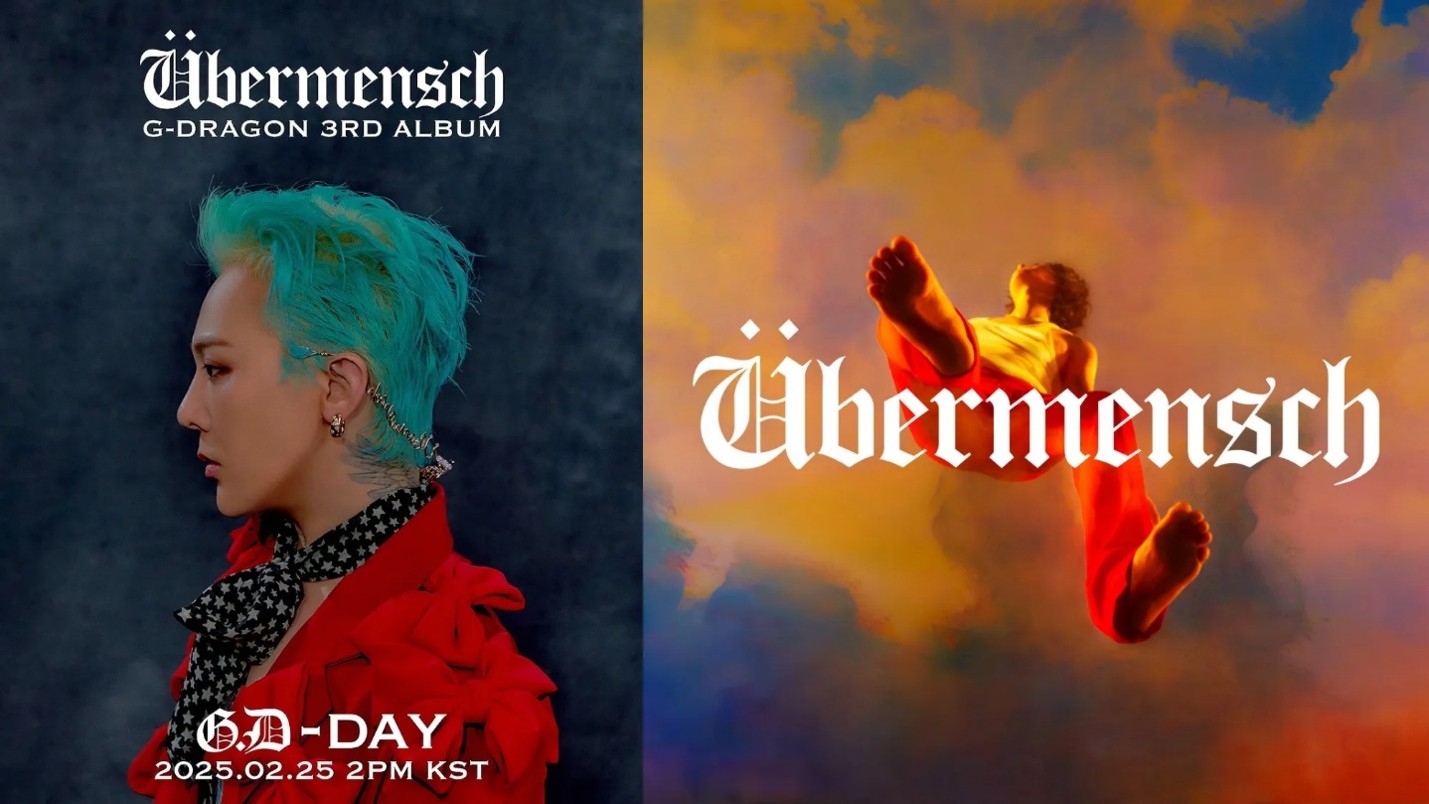 G-Dragon (Photo © Galaxy Corporation)
The work makes explicit reference to classical iconography, particularly the depiction of St. Michael the Archangel defeating Satan. Yet here, G-Dragon’s face appears on both figures—disrupting binary oppositions of good and evil, hero and antagonist. This dual embodiment speaks to the nature of contemporary celebrity, wherein an artist can be simultaneously revered and vilified, constructed and deconstructed in an endless feedback loop of media perception.
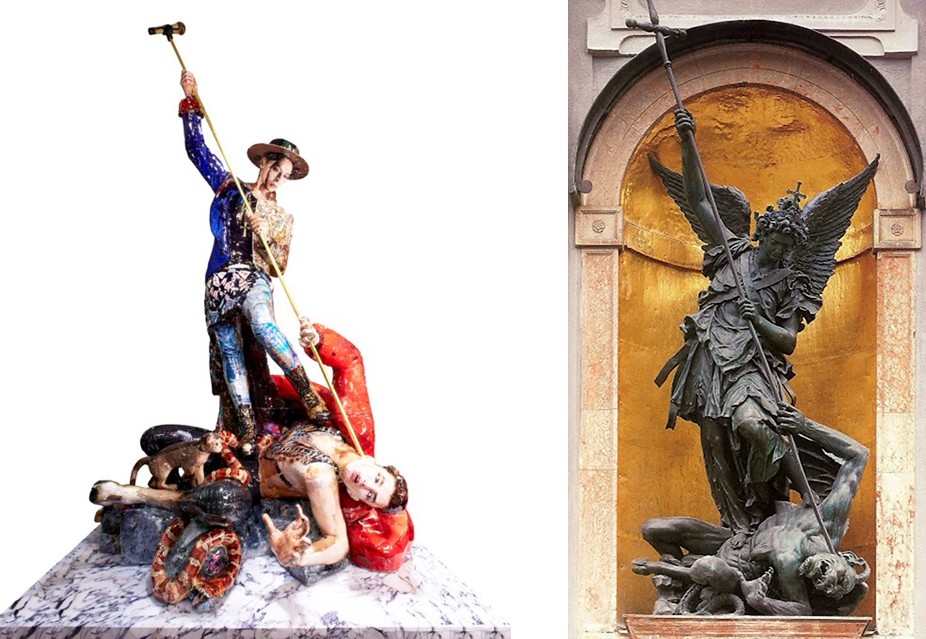 (L) Untitled: G-Dragon, A Space of No Name, 2015, C-print, mixed media, size variable, presented at PEACEMINUSONE_Beyond the Stage, Seoul Museum of Art, Seoul.
(R) St. Michael the Archangel sculpture in Hamburg, Germany.
Reflections of an Image: The Role of the Mirror
A crucial component of Untitled: G-Dragon, A Space of No Name is its mirrored environment, which fragments and refracts the viewer’s perception of the sculpture. Depending on one’s position, different facets of G-Dragon’s form emerge, reinforcing the multiplicity of identity. This interplay between viewer and object underscores a larger existential dilemma: how much of the self is self-determined, and how much is projected by external forces?
The mirrored surface also introduces an element of spectatorship and complicity—forcing the viewer to confront their own role in the construction of cultural myths. By reflecting not just the work but also those who observe it, Gwon implicates the audience in the process of meaning-making, blurring the distinction between subject and object.
Beyond the Binary: Gwon Osang and the Post-Identity Era
Gwon Osang, much like G-Dragon, operates within and beyond defined artistic categories. His sculptures navigate the liminal space between fine art and popular culture, high aesthetics and mass media. A decade after its creation, Untitled: G-Dragon, A Space of No Name remains strikingly prescient, aligning with contemporary conversations on fluid identity, media distortion, and the performative nature of the self.
G-Dragon’s “Übermensch” album articulates a philosophy of transcendence—an ethos of existing beyond predefined structures. Gwon’s work, in turn, suggests that such transcendence is not a given but a process: a continual negotiation between perception and self-actualization, construction and deconstruction. The “Übermensch” is not merely a figure of aspiration but a reflection of the cultural and psychological conditions that demand reinvention as a means of survival.
In this sense, Gwon Osang’s sculptural interpretation of G-Dragon is not just an exploration of celebrity but an inquiry into the broader mechanisms of identity in the 21st century. By engaging with the visual, philosophical, and technological frameworks that shape our self-perceptions, Untitled: G-Dragon, A Space of No Name offers a lens through which we might reconsider the dynamics of contemporary existence—an existence defined by the perpetual tension between being seen and becoming something new.
Writings