Exhibitions
《Double Spread》, 2026.06.19 – 2026.07.18, PAGEROOM8
2026.06.19
Park Jung-won | Director of PAGEROOM8
The Many Possibilities of Sculpture
《Double Spread》 is an exhibition that examines the point at which the distinctly sculptural sensibilities developed by Gwon Osang (b. 1974) and Ham Seongju (b. 1990) unfold across the picture plane. The first thing the two artists have in common is that both majored in sculpture. The second is that they have each chosen a two-dimensional medium as the basis of their practice. Gwon Osang works with photography, while Ham Seongju works with painting. Yet the bodies of work they have continuously developed are not simply about photography or painting.
Rather, each artist constructs his own conceptual pages through questions such as ‘What is sculpture?’ and ‘What is three-dimensionality?’ This is why the exhibition is titled “Double Spread.” The image of an open book—whose thin, flat pages nevertheless contain countless concepts—symbolically captures the unique sensibilities shared by the two artists. By adding physical materials and conceptual layers while simultaneously subtracting, emptying, and refining them through constructive and sculptural processes, both artists move freely between the two-dimensional and the three-dimensional.
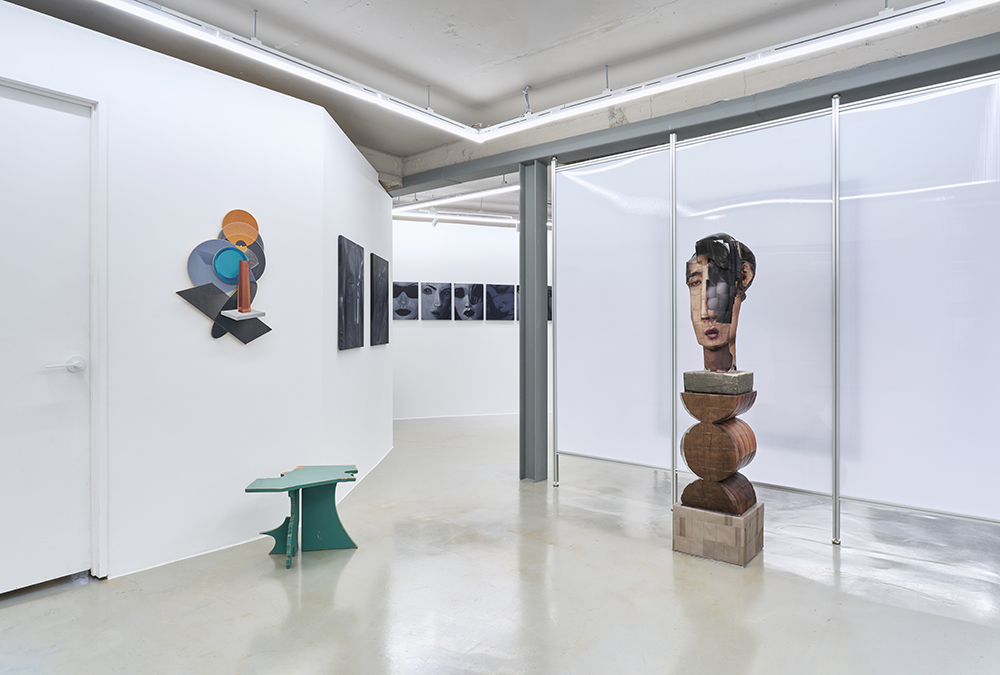
Installation view of《Double Spread》 © PAGEROOM8
New Type Sculpture
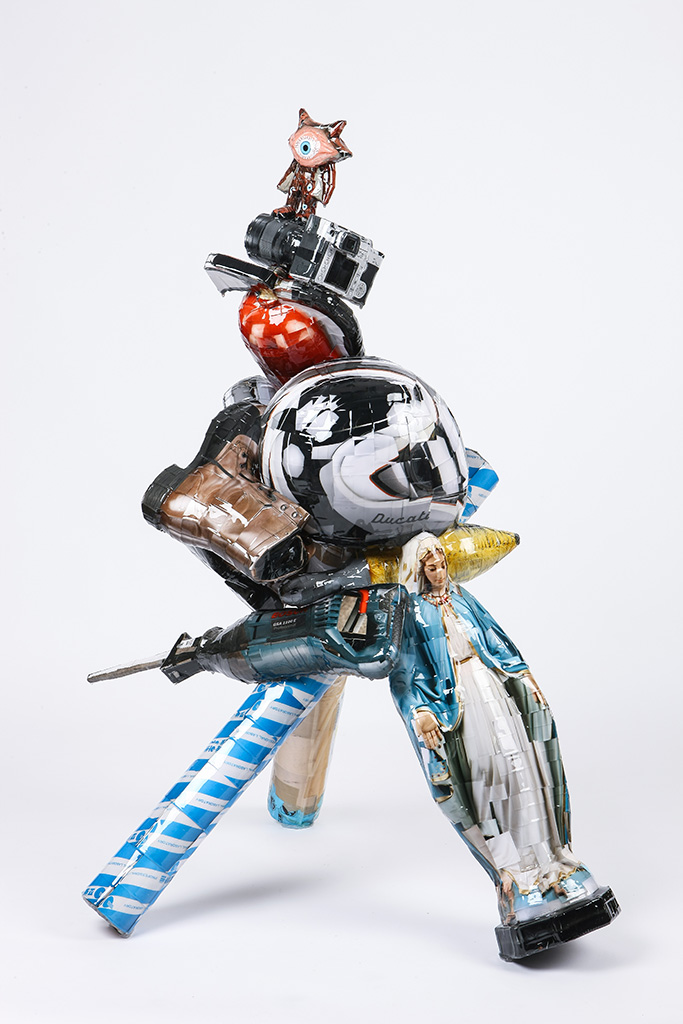
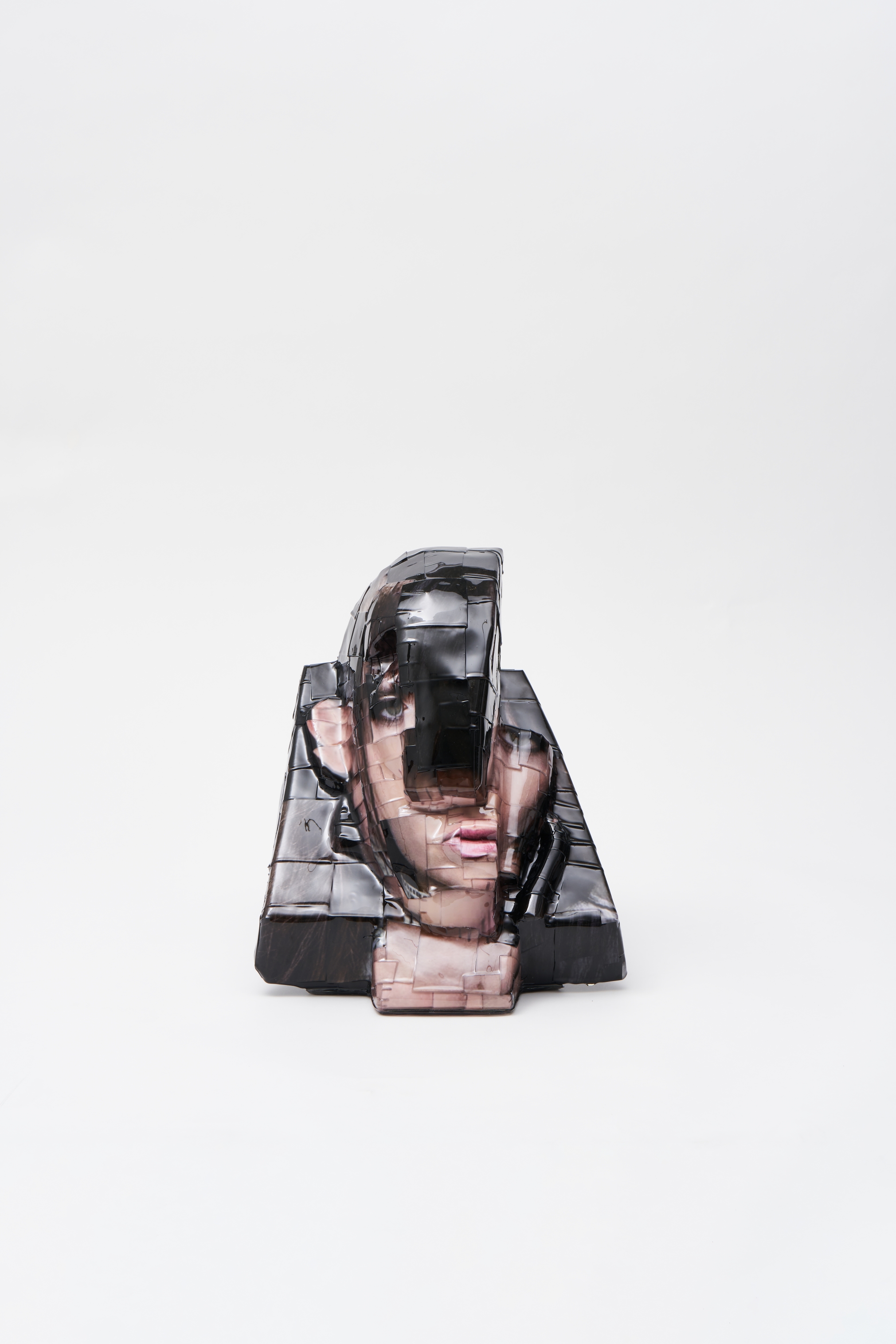
The ‘photography’ that Gwon Osang speaks of may be more accurately understood as ‘image.’ The ‘objects’ he constructs from images and photographs exist in an ambiguous space between the masterpieces of past sculptors and the contemporary world inhabited by “the sculptor Gwon Osang.” Since presenting his ‘Photo Sculpture’ in 1998, he has continuously developed his practice into a number of series designated by the artist himself.
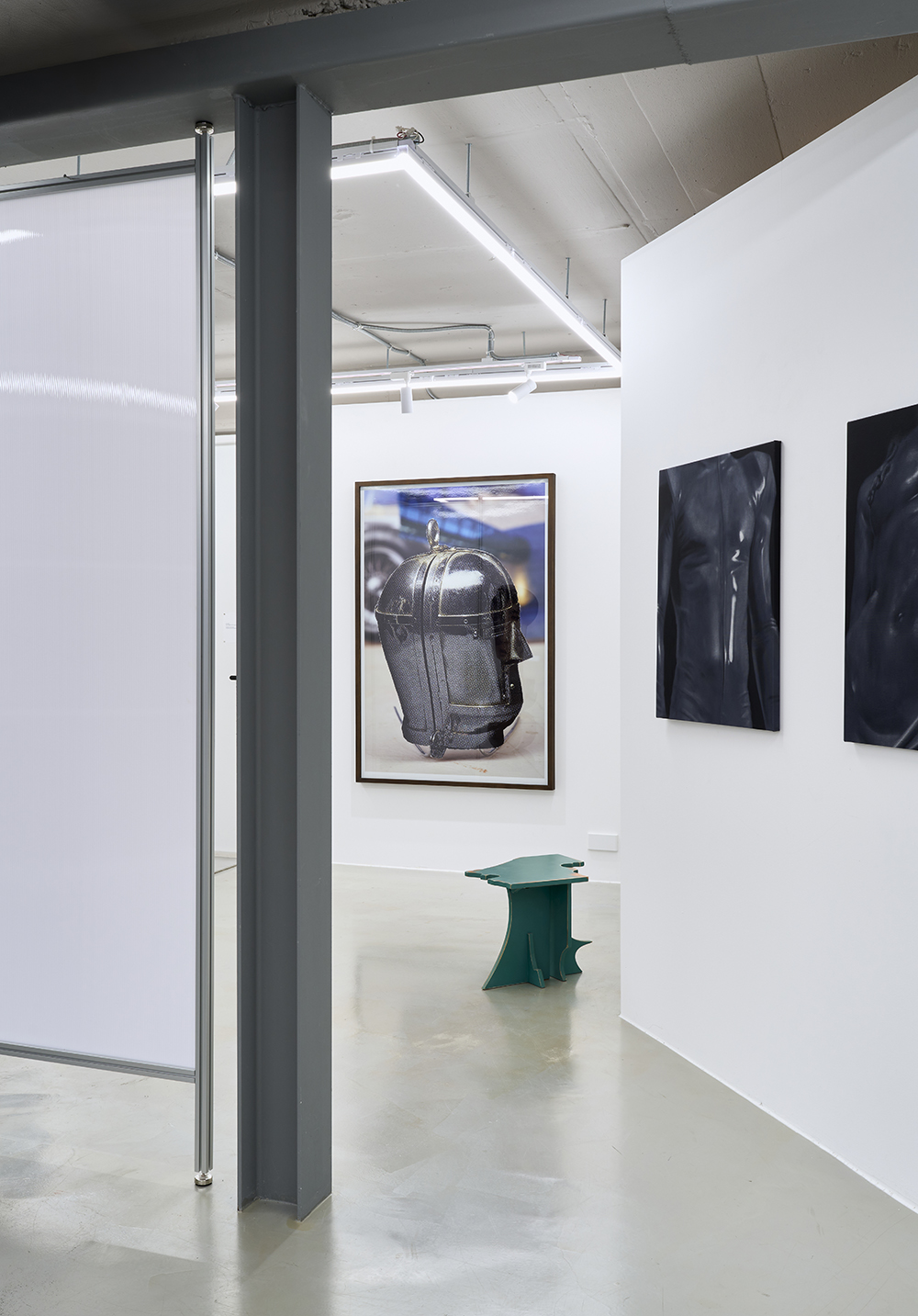
Installation view of《Double Spread》 © PAGEROOM8
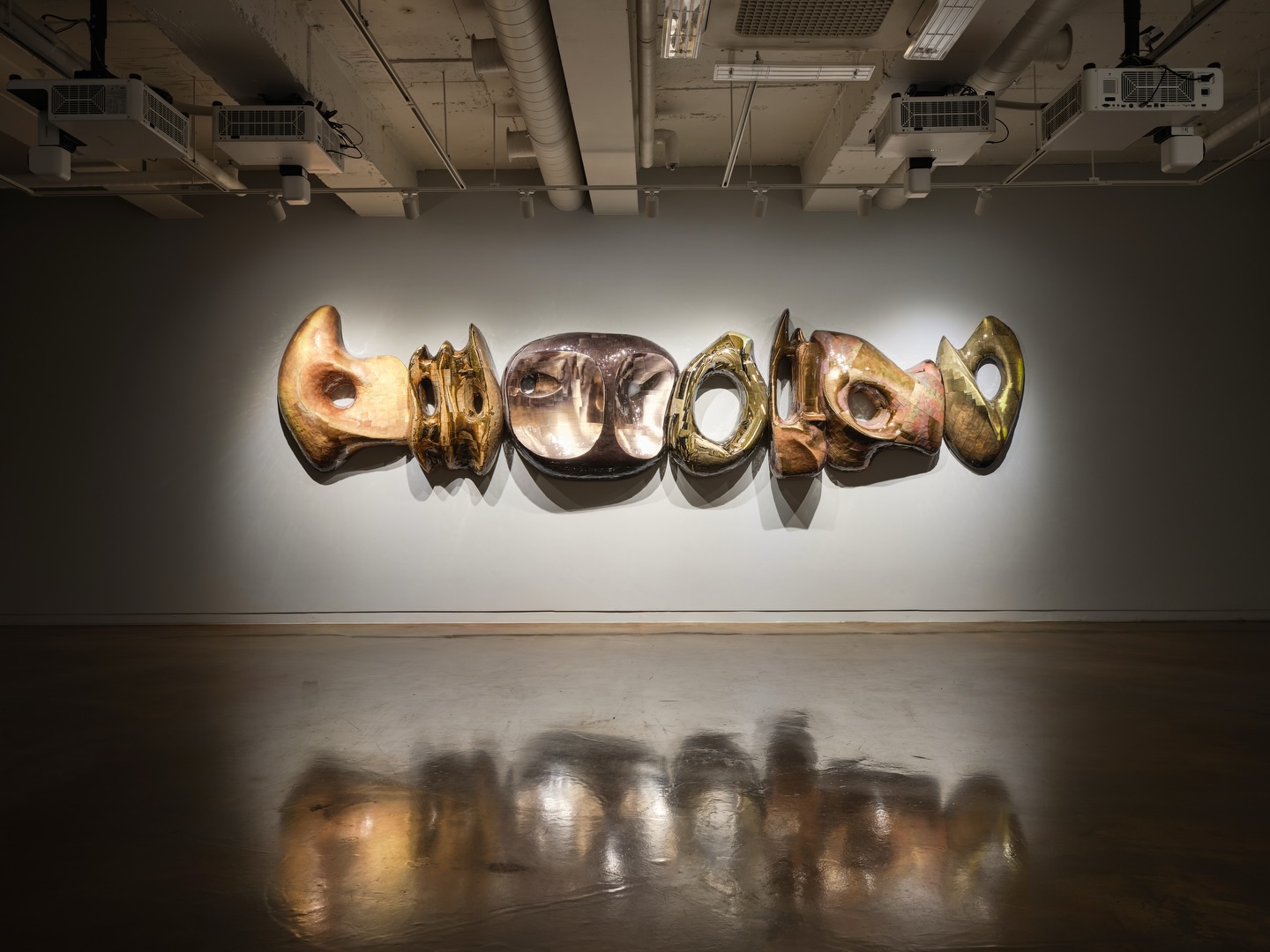
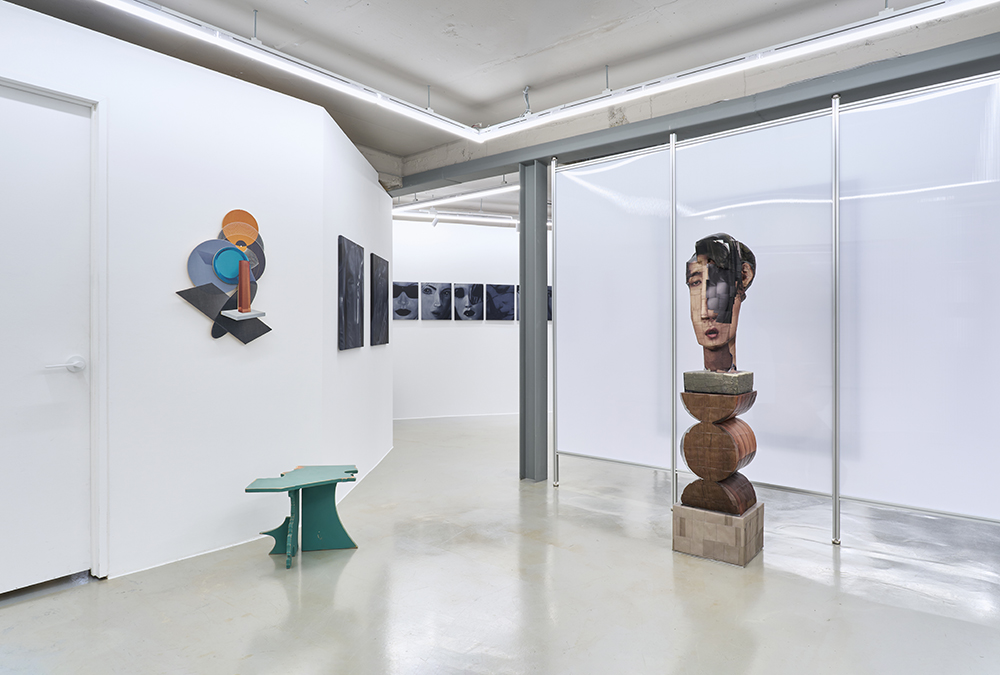
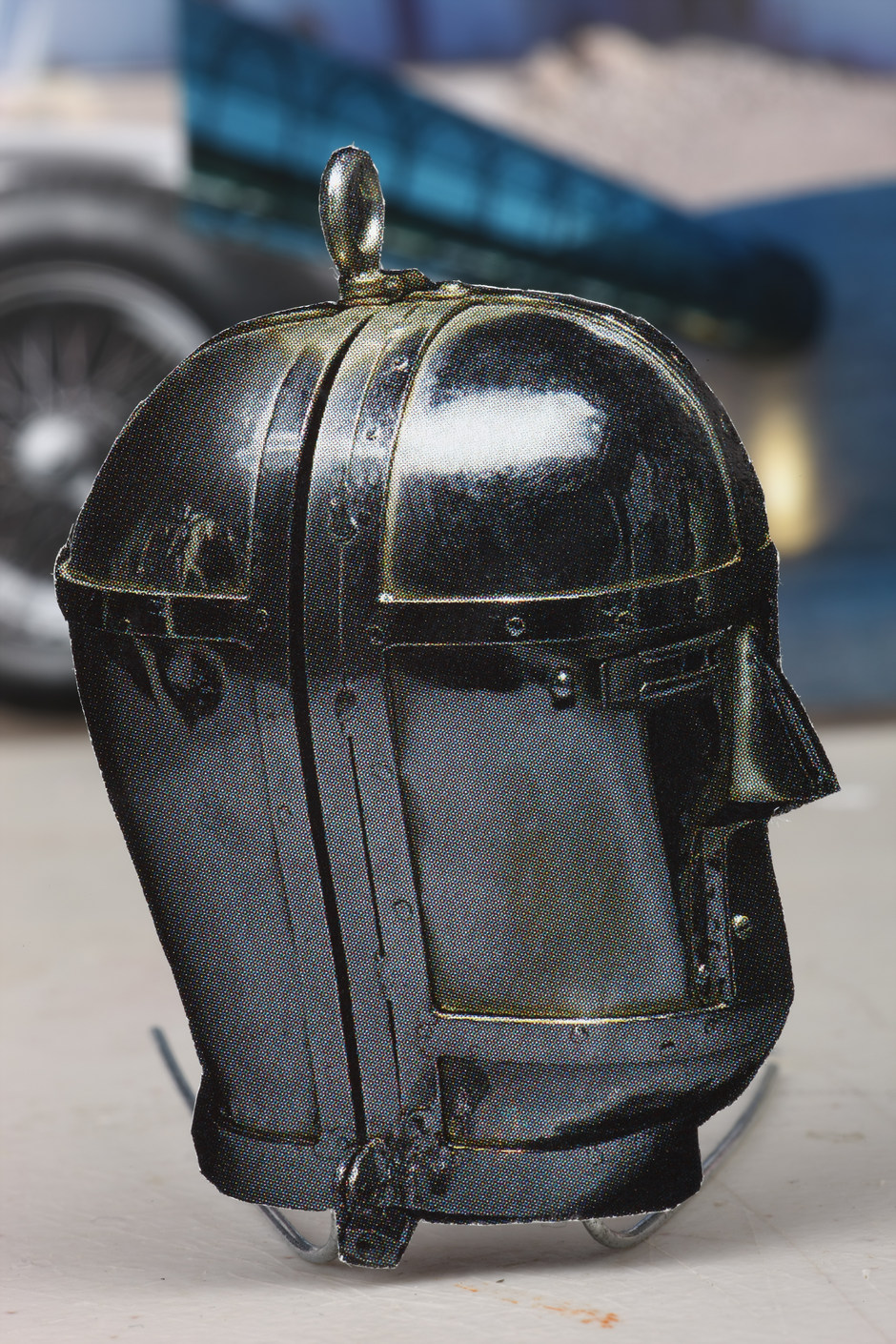
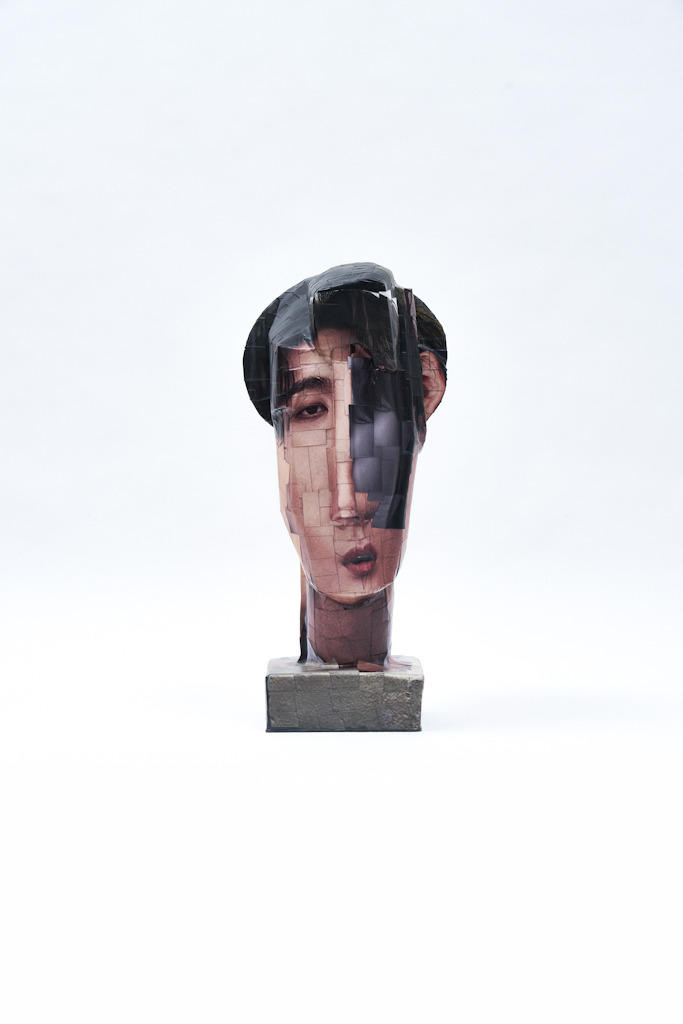
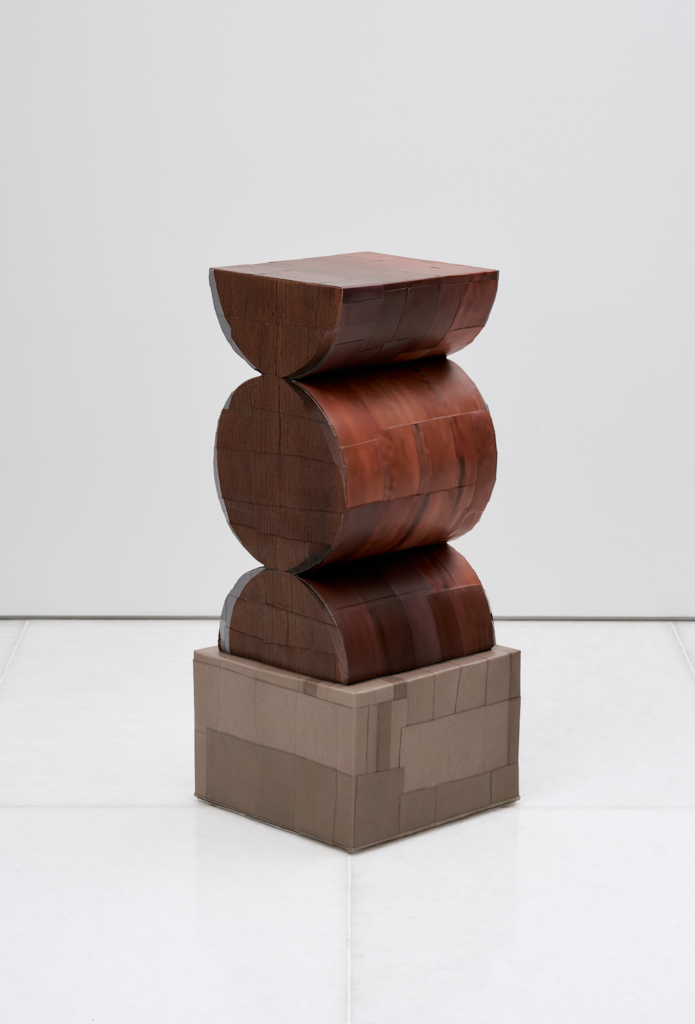
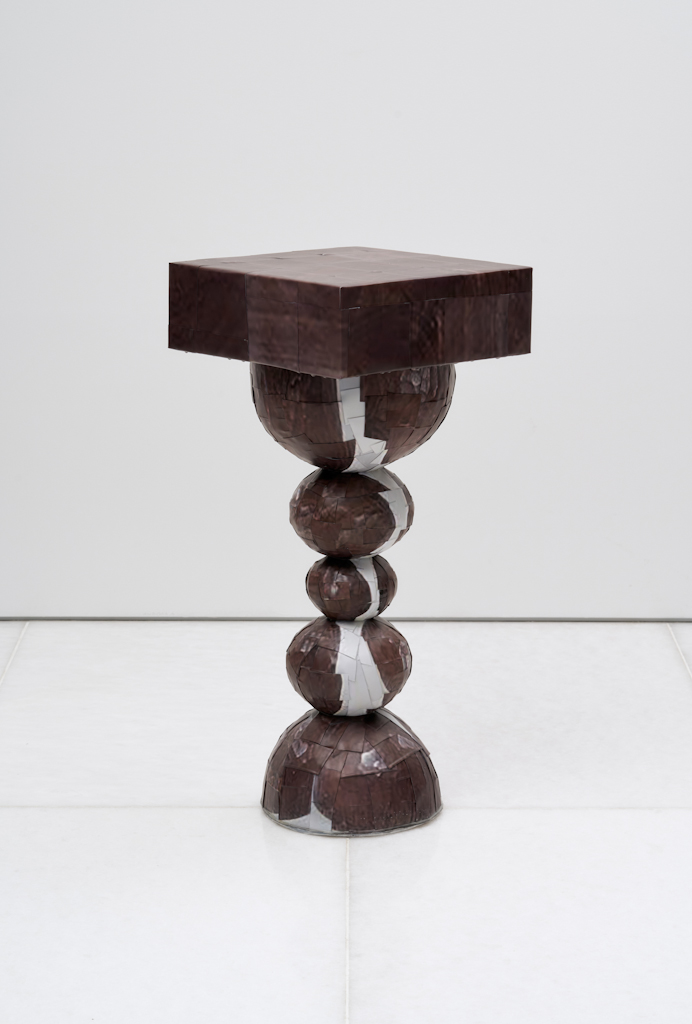
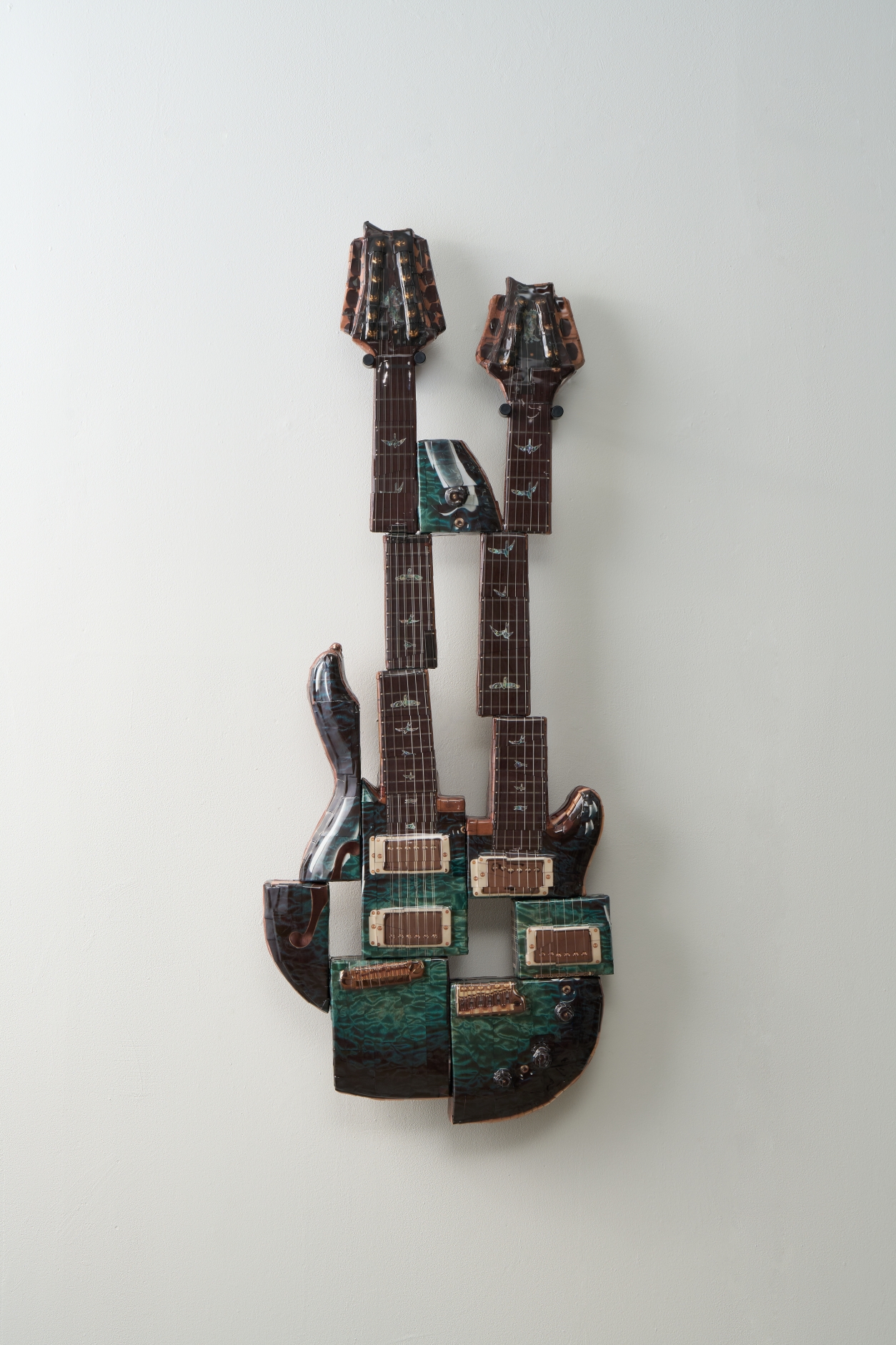
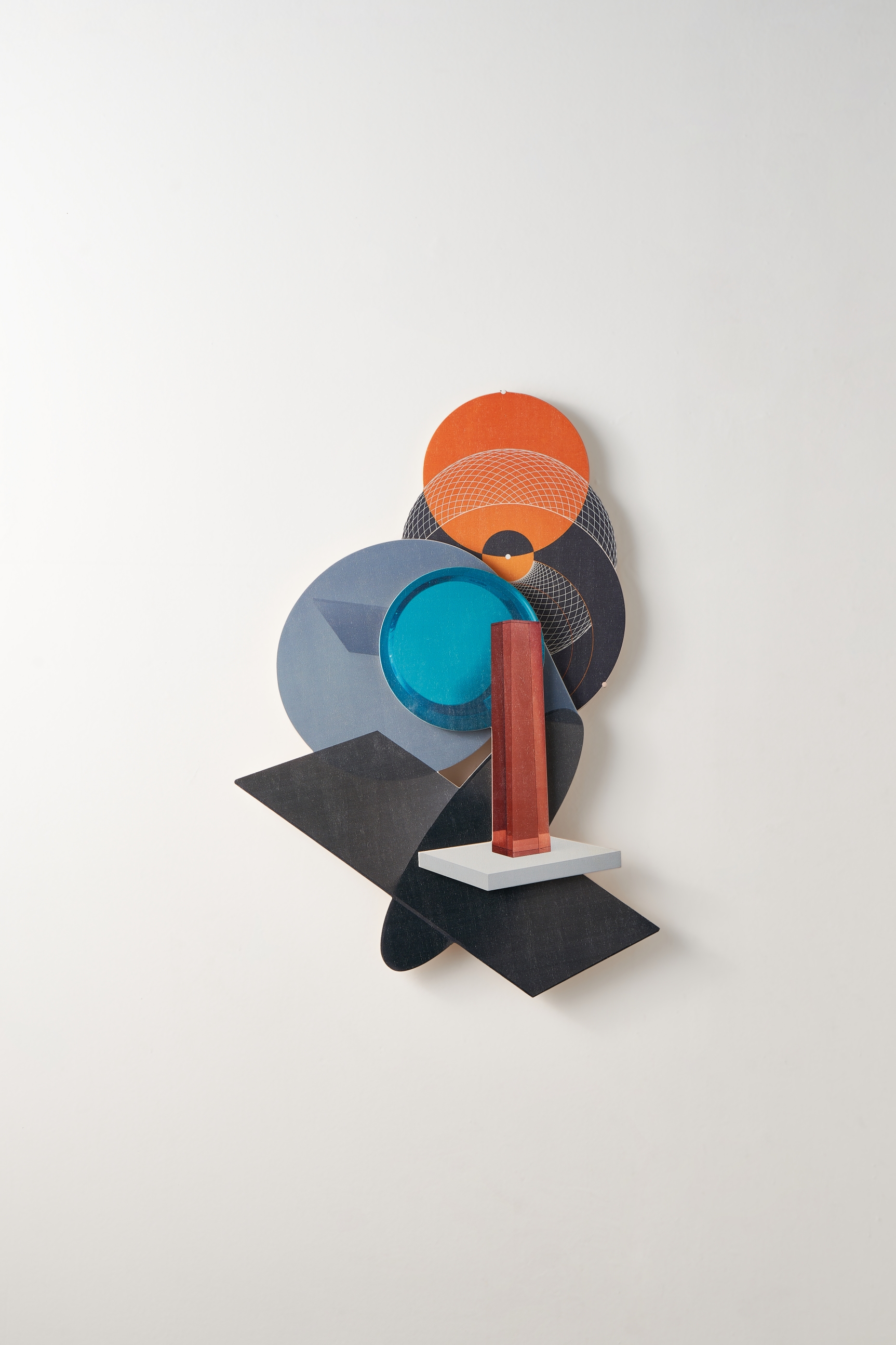
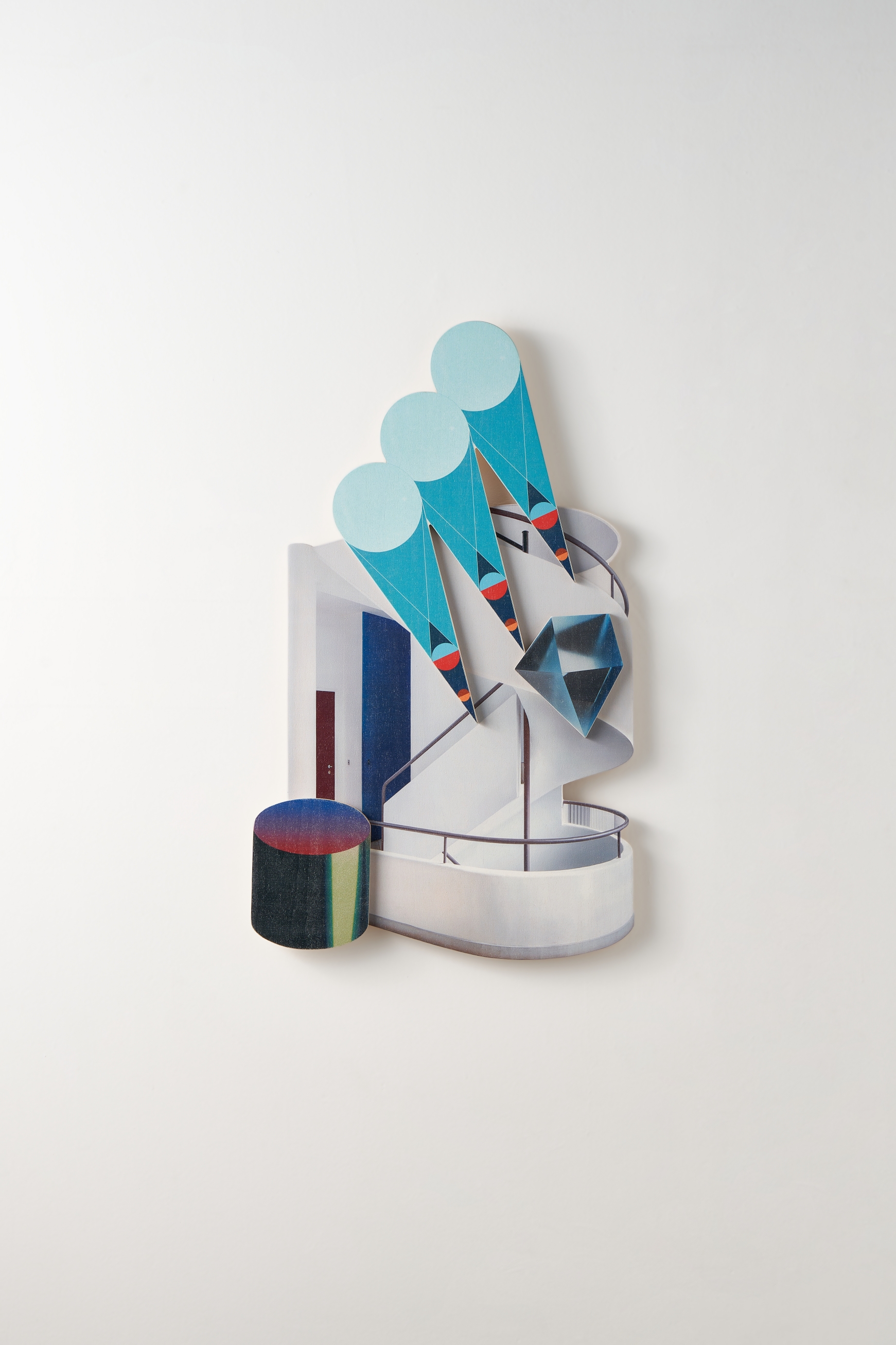
The twelve works presented in this exhibition reveal the remarkable breadth of his sculptural language. The exhibition includes abstract busts developed from the ‘Deodorant Type Photo Sculpture’ series; pedestals inspired by Constantin Brâncuși’s Young Bird and Socle Composé de Trois Éléments; small-scale ‘Relief’ works that translate the monumental ‘New Structure’ series into wall-mounted forms; furniture produced in collaboration with Kim Min-ki using discarded materials left over from the ‘Relief’ series; ‘The Flat,’ in which monthly images from wallpaper design magazines are photographed while standing against wire to produce a distinctly contemporary visual sensibility; ‘Mass Patterns,’ inspired by the small supporting sculptures historically attached beneath monumental marble statues and composed of human figures, animals, and objects; and recent works abstracting the PRS (Paul Reed Smith) double-neck model and the iconic Gibson Les Paul guitar.
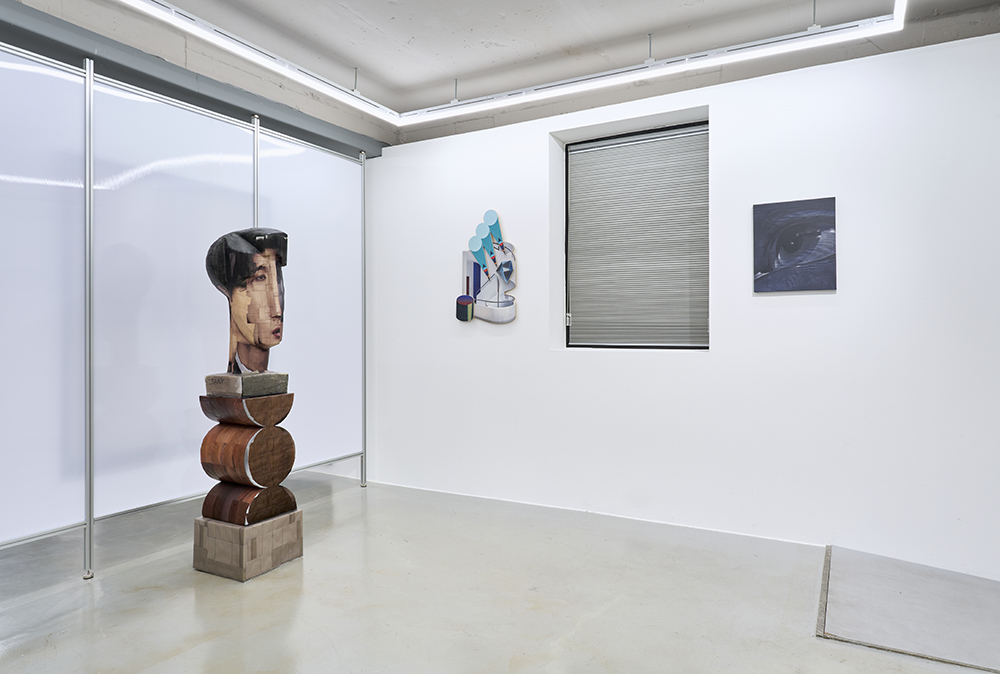
Installation view of《Double Spread》 © PAGEROOM8
During the transitional periods between each series, previous works become references for subsequent ones, allowing the series to evolve in a continuous chain. Gwon Osang has long admired the monumental forms and traditional sculptural materials—such as wood and bronze—that occupy significant positions within the history of sculpture.
Yet he became increasingly interested in discovering a personal methodology through which sculpture could be produced as an intimate practice. This inquiry led to the development of ‘Photo Sculpture,’ a contemporary sculptural form characterized by hollow interiors and weights disproportionate to their physical scale, which has now become an established sculptural genre. The concept that runs throughout these series is the question of ‘sculpture’ itself.
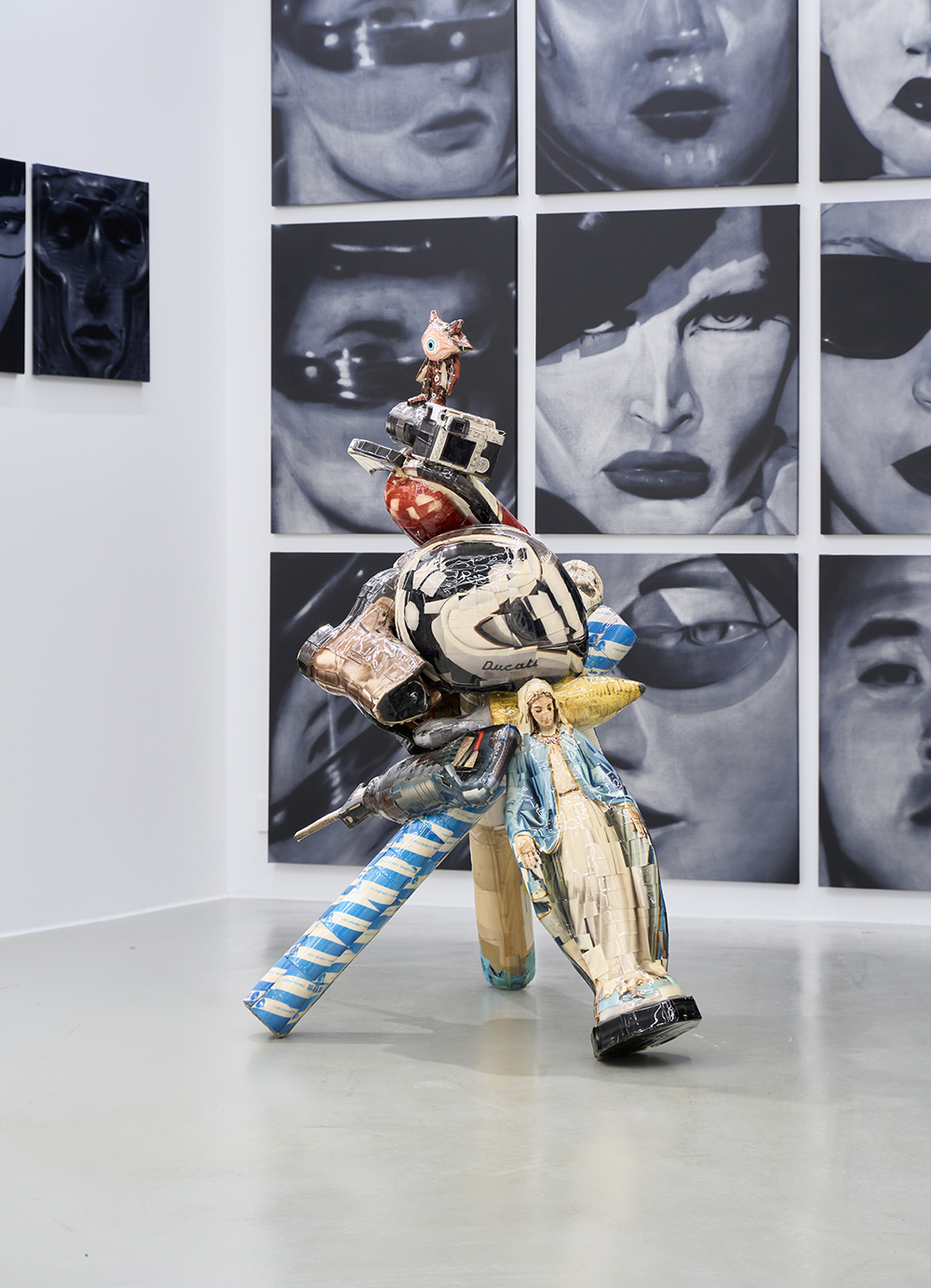
Installation view of《Double Spread》 © PAGEROOM8
The concept that runs throughout these series is the question of ‘sculpture’ itself. Methodologically, however, Gwon Osang focuses less on sculptural mass than on the spatiality and emptiness generated by inverted silhouettes. Particularly in ‘The Flat,’ ‘New Structure,’ and ‘Relief,’ one witnesses the artist's search for the Z-axis that cannot be perceived within two-dimensional X- and Y-axis imagery.
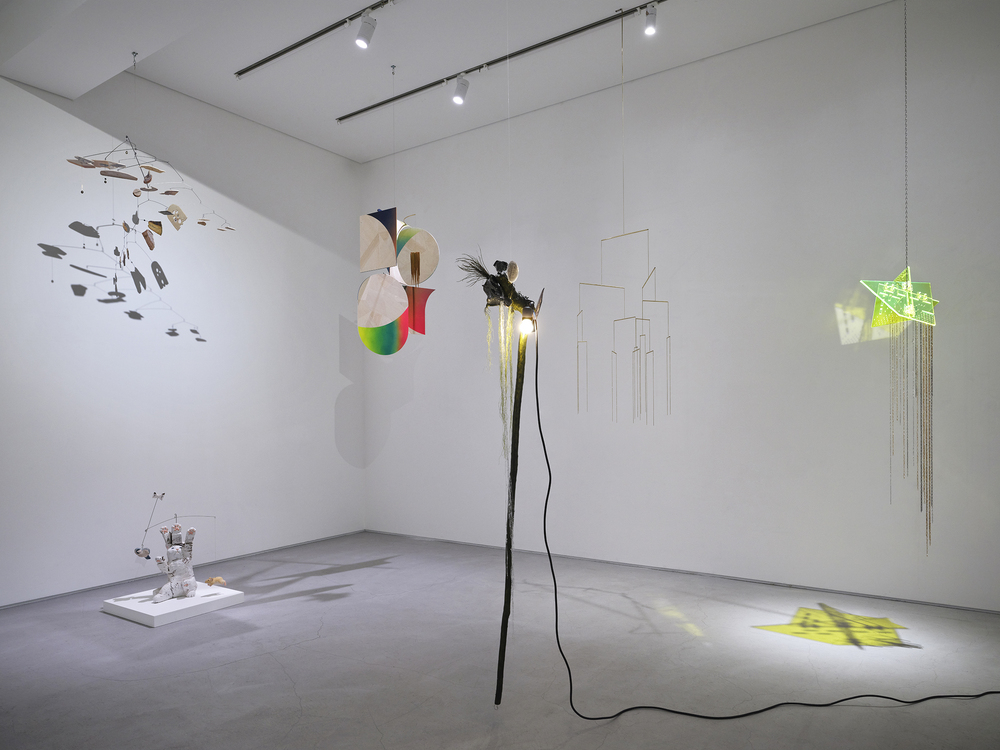
The repeated arrangement of upright and overlapping magazine pages creates perspective, while the staged photographs of ‘The Flat’ borrow the formal language of Alexander Calder’s stabile sculptures before being realized once again as large-scale aluminum sculptures in ‘New Structure.’ These are subsequently flattened into the ‘Relief’ series. Across these three interconnected stages, compressed images, unfolded volumes, and folded sculptural structures reveal fascinating moments in which two-dimensional forms acquire actual shadows and spatial depth.
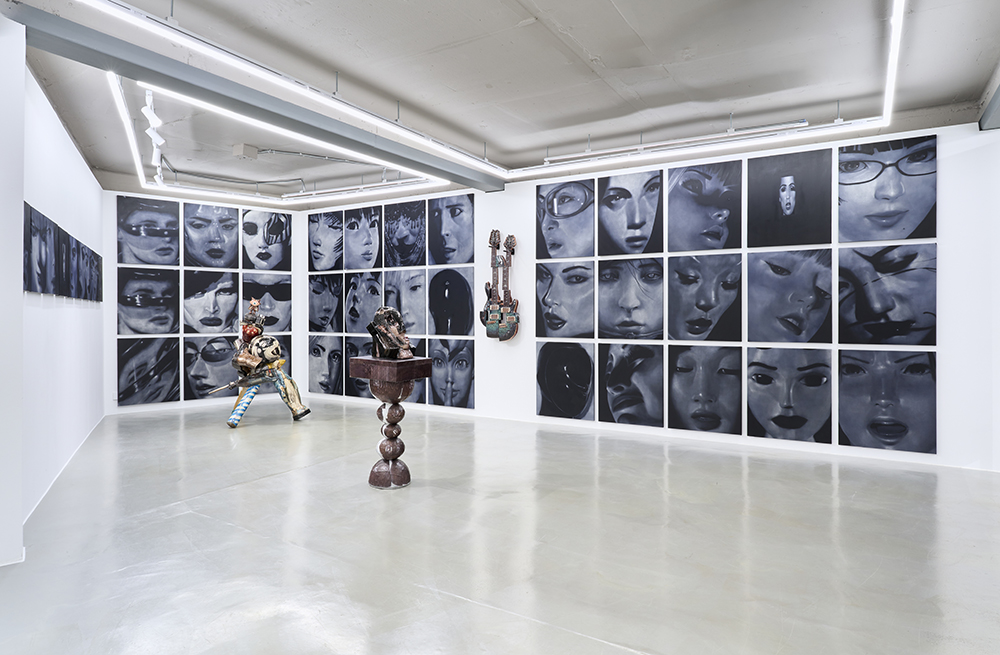
Installation view of《Double Spread》 © PAGEROOM8
Ways of Sculpting
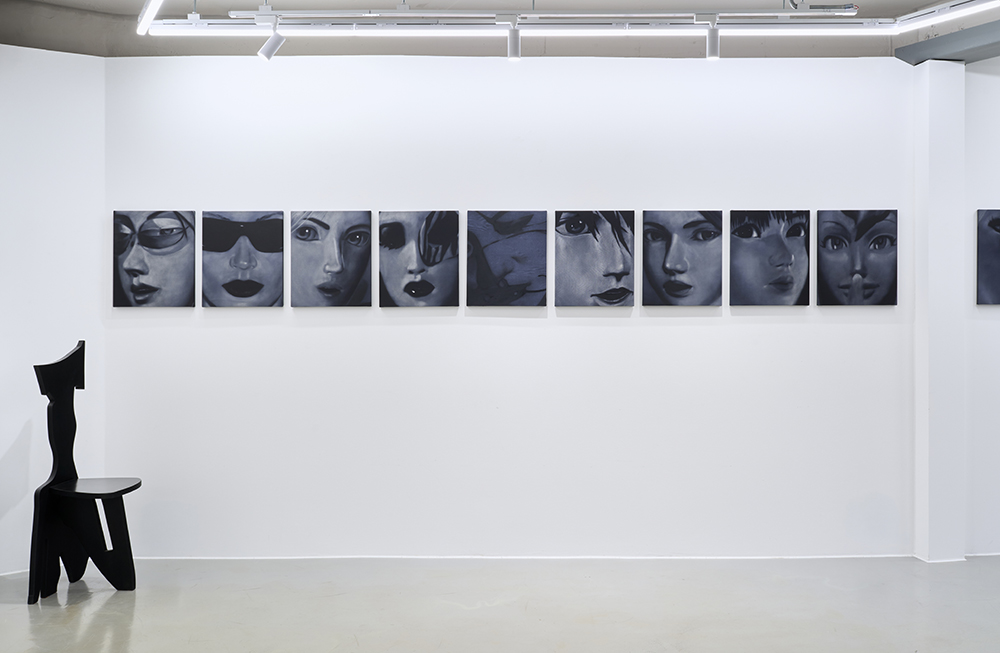
This exhibition marks the first presentation of Ham Seongju’s monochromatic portrait series. Eighteen No. 8 canvases are installed in a single horizontal row, while thirty-six No. 20 canvases are arranged in twelve columns across three rows. Just as one's eyes naturally move from left to right when reading a book, the works are intentionally installed according to the chronological order in which they were completed.
By consistently using the human figure as his subject, Ham demonstrates what may be described as a sculptural attitude expressed through painterly techniques. The shape, spacing, and placement of facial features not only distinguish individuals but also constitute the most delicate and three-dimensional areas of the human body.
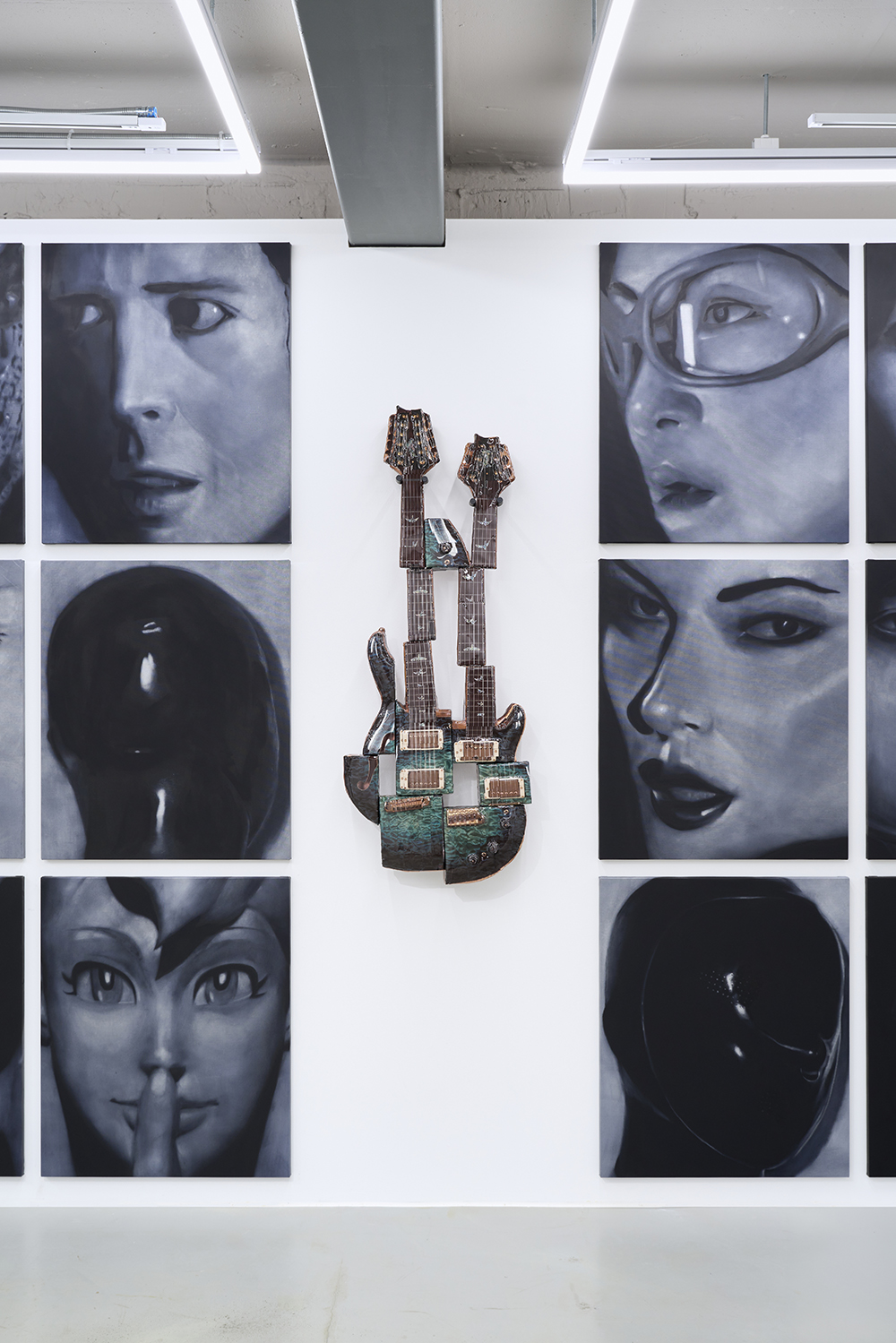
Installation view of《Double Spread》 © PAGEROOM8
The figures appearing throughout his paintings are based on images he has collected as references since before his 2019 solo exhibition. Existing somewhere between reality and fiction, they occasionally evoke identifiable individuals while simultaneously recalling the visual atmosphere of fashion brands or fantasy games. Although approximately twenty additional works could not be installed due to spatial limitations, the chronological arrangement clearly reveals that the figures gradually become more refined and sharply defined over time.
The artist has remarked that after producing around thirty paintings he begins to perceive subtle changes. These shifts concern not so much the depicted forms as his own artistic attitude. At times representation takes precedence; at others, psychological expression becomes dominant. Each painting therefore offers the artist a distinct opportunity for self-awareness. Repeating identical motifs at different scales or exposing variations within recurring imagery functions as a direct demonstration of both his evolving methodology and artistic capability.
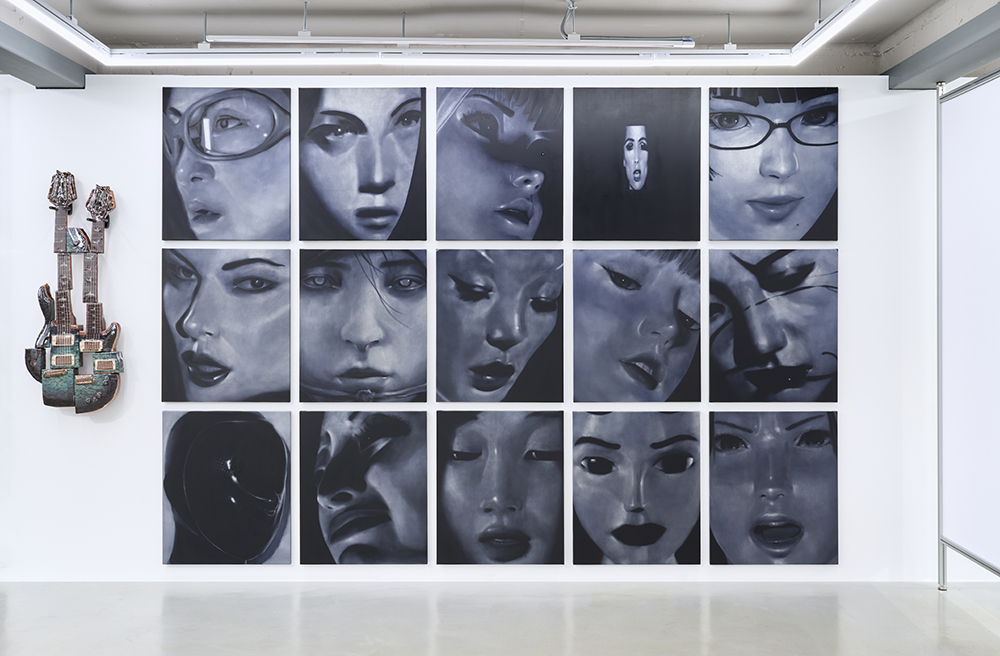
Installation view of《Double Spread》 © PAGEROOM8
Ham Seongju’s paintings remain consistently monochromatic. Moiré patterns—the interference effect created when photographing a monitor—frequently emerge across the pictorial surface. This visual language stems partly from his childhood, as his father operated an arcade, making the figures and backgrounds of CRT screens a familiar environment. These virtual images, often more readily accepted than actual landscapes, became essential material through which he developed his perception of three-dimensionality. As a sculptor by training, Ham began painting after discovering subject matter capable of realizing spatial sensation within a flat surface, and this pursuit continues today.
Alongside portraits, this exhibition introduces ‘sculpture’ itself as a new subject. These include an imagined torso of Dionysus, the god of abundance, as well as a contemporary sculptural interpretation adapted from the game scene ‘Slaying the Minotaur,’ depicting the defeat of the Minotaur within the labyrinth of Greek mythology.
Installation view of《Double Spread》 © PAGEROOM8
The numerous monochromatic canvases ultimately direct viewers toward a singular and lucid gaze that transcends notions of lost temporality or relics of the past. They evoke an uncanny sense of déjà vu while simultaneously making us aware of systems existing between reality and virtuality. The archive of figures filling the exhibition space functions as a carefully constructed design of vision, allowing the movement of one's gaze to experience layers of time formally and to discover oneself inhabiting a unique spatiotemporal condition.
The following observations may be made through 《Double Spread》.
Gwon Osang continues to develop new methodologies for making sculpture by expanding the conceptual structure of sculpture itself. Above all, while maintaining profound respect for sculpture and its history, his personal sculptural methodology prevents the very concept of sculpture from becoming fixed as mere abstraction.
In Ham Seongju’s monochromatic paintings, one can only speculate about what lies beyond surfaces completed through carefully selected subjects, dense constructive brushstrokes, and remarkably sculptural touches. The appearance of moiré patterns and the unseen edges of the canvas suggest that each painted surface may merely be the skin through which an independent world is projected.
Now, we gently close Double Spread.
※ References
1. Interview with Gwon Osang, Artist’s Studio, May 7, 2026.
2. Interview with Ham Seongju, Artist’s Studio, May 1, 2026.
3. Interview Reference: MMCA Artist Talk: Gwon Osang, 2021 https://www.youtube.com/watch?v=St6X6-RdtIc
4. Gwon Osang Official Website https://osang.net
References
Exhibited Works
Exhibitions
Exhibitions
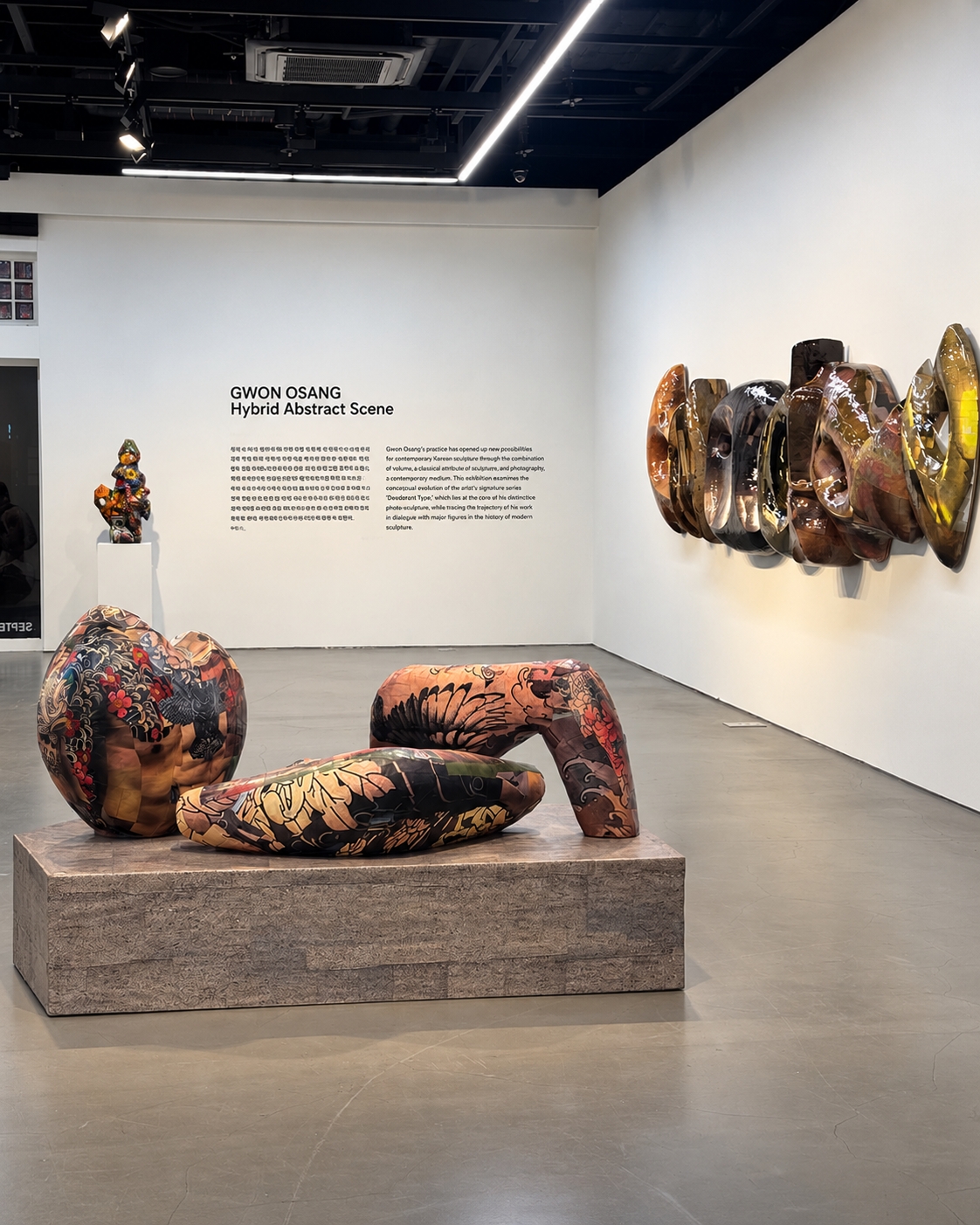
《GWON OSANG: Hybrid Abstract Scene》, 2026.09.11 – 2026.11.08, SHINSEGAE GALLERY, DAEGU
2026.09.11